| |
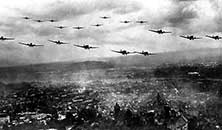
| Nazi Germany invaded Poland, overwhelming the Polish Army with 58 German divisions and air cover from the German air force, the Luftwaffe. This action started the second world war, prompting England and France to declare war on Germany two days later. |
|
|
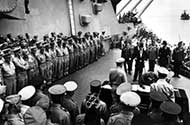 |
The Emperor of Japan surrendered unconditionally to the U.S. and its allies in a ceremony on the deck of the battleship U.S.S. Missouri, ending the second world war.
|
|
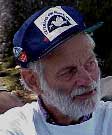
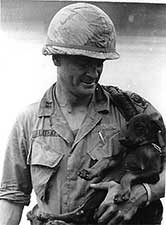
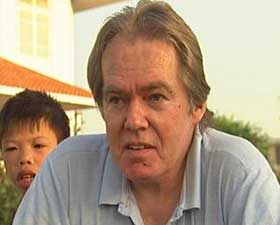
| Angelo (Charlie) Liteky & George Mizo, both Vietnam veterans, began an open-ended Fast For Life on the steps of the U.S. Capitol. They were calling attention to their opposition to U.S. support of the Nicaraguan contras and repressive regimes in El Salvador and Guatemala. |
|
|
“our expression of a deeply felt desire to do everything and anything we can . . . to stop the war with Nicaragua.”
|
 |
| Charles
Liteky |
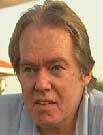
George
Mizo |
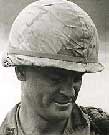
| Liteky was a Catholic chaplain in the Vietnam War and had received the Congressional Medal of Honor. |
Charles
Liteky and his subsequent peace efforts  |
|
During a nonviolent protest at the Concord (California) Naval Weapons Station, a Navy munitions train ran over Brian Willson.
An Air Force and Vietnam veteran, Willson and the other protesters were attempting to stop shipment of weapons to Nicaragua and
El Salvador. |
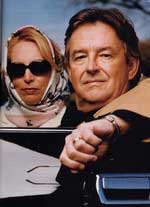
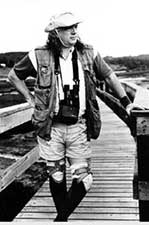 Brian
Willson bird-watching California, 1997. Brian
Willson bird-watching California, 1997.
|
They considered U.S. policy in Central America a violation of the Nuremberg Principles. (Here is a link to those principles)
Willson lost both legs and suffered other injuries but has remained an active and articulate leader in the anti-military movement. |
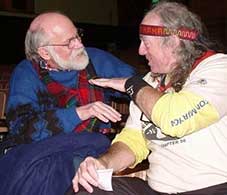
Ron
Kovic (author 'Born
on the Fourth of July')
and Brian Willson (also born on the Fourth of July)
|
Willson’s
testimony before the U.S. House Armed Services Subcommittee
on Investigations
|
|
|
White House staffers decided to purchase some crack cocaine so President George H.W. Bush could hold the illegal drug in his hands during a national address. On the first attempt, the drug dealer didn't show up. On the second try, an undercover drug agent's body microphone didn't work. Trying for the third time, Bush's team managed to purchase the crack, but the camera operator videotaping the deal missed the action as a homeless person assaulted him.
|
|
|
Kurdish and British activists blockaded an arms trade exhibition outside London. 89 members of Campaign Against the Arms Trade (CAAT)were arrested for protesting the presence of Turkish, Chinese and Indonesian government representatives in Britain to purchase weapons. The Labour government had pledged “[We will] not permit the sale of arms to regimes that could use them for internal repression or external aggression . . . .” Great Britain is the world’s second largest arms manufacturer (by dollar volume) after the U.S.
|
| Campaign Against the Arms Trade home |
|
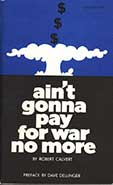
September
1 - International
Day of War Tax Resistance.
|
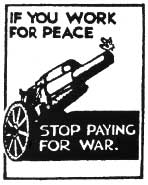 |
“Refusing
to pay taxes for war is probably as old as the first
taxes levied for warfare...”
War Tax Resistance Coordinating Committee
|
 |
|
| A mob of white coal miners, led by the Knights of Labor, violently attacked their Chinese co-workers in Rock Springs, Wyoming, killing 28 and burning the homes of 75 Chinese families. The white miners wanted the Chinese barred from working in the mine. The mine owners and operators had brought in the Chinese ten years earlier to keep labor costs down and to suppress strikes. |
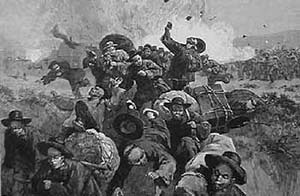 |
| Chinese fleeing Rock Springs |
| The unfortunate story and illustrations of the scene (scroll down) |
|
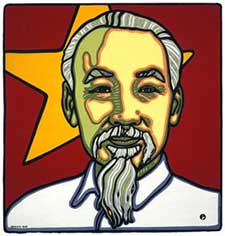 |
Revolutionary leader Ho Chi Minh declared Vietnam a republic and independent from France (National Day). Half a million people gathered in the capital of Hanoi to hear him read the Vietnamese Declaration of Independence, which was modeled on the U.S. Declaration of Independence.
note:Ho
Chi Minh translates to 'He Who Enlightens' |
Read about how it was influenced by the U.S. Declaration |
|
| On what was supposed to be the first day of school in Grenada, Mississippi—and the first day in an integrated school for 450 Negro children—the school board postponed opening of school for 10 days because of “paperwork.” Nevertheless, the high school played its first football game that night. Some of the Negro kids who had registered for that school tried to attend the game but were beaten and their car windows smashed. |
|
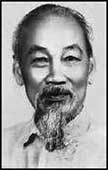
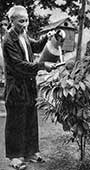
| Vietnamese revolutionary and national leader
Nguyen Tat Thanh (aka Ho Chi Minh), 79, died of natural causes
in Hanoi. |
 |
|
 Uncle
Ho Uncle
Ho |
| |
| Ho Chi Minh |
Ho
and his struggle for Vietnamese independence |
|
The Paris Peace Treaty between the U.S. and Great Britain — formally ending the American War for Independence — was signed by John Adams, Benjamin Franklin and John Jay.
In addition to giving formal recognition to the U.S., the treaty established U.S. boundaries, specified certain fishing rights, allowed creditors of each country to be paid by citizens of the other, restored the rights and property of Loyalists, opened up the Mississippi River to citizens of both nations, and provided for evacuation of all British forces. |
The Treaty of Paris |
|
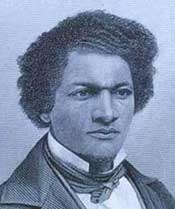 |
Frederick Douglass made his escape from slavery in Baltimore and went on in life to become an abolitionist, journalist, author, and human rights advocate. |
The
escape from “Narrative of the Life of Frederick Douglass,
An American Slave”
A Frederick Douglass biography |
|
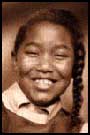
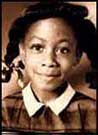
| Elizabeth Eckford was blocked from becoming the first black student at Little Rock’s Central High School in Arkansas. |
|
| Representatives from 27 African nations, the Caribbean nations, four South American countries, Australia, and the U.S. met in Atlanta, Georgia, for the first Congress of African People. |
 |
| Read more about CAP in historical context |
|
| The Musa Anter, or Kurdish Peace Train (named after an assassinated Kurdish writer) was organized by peace activists to call attention to the oppression of the Kurdish people in Turkey by their own government. At the time, the Turkish words for Kurd, Kurdish, guerilla and torture were banned, and it was illegal to speak the Kurdish language. |
|
The Peace Train was to leave London and travel through Europe to Diyarbakir in eastern Turkey to celebrate International Anti-War Day there. Germany disallowed passage of the Train through its territory (the Germans and Turks have strong military ties). The group then flew to Istanbul, intending to take a fleet of busses to the Kurdish region. Turkish troops stopped them from reaching Diyarbakir, forcing them back to the capital.
|
|
| On this day they tried to hold a press conference to discuss the Kurdish issue. The police arrested or beat all present, including foreign diplomats. |
| The
story of the Musa Anter Peace Train |
|
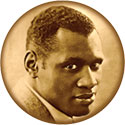
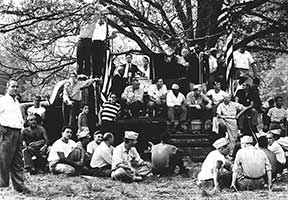
| Paul Robeson, scholar, athlete, musician and leader, defying a racist and red-baiting mob, sang to 15,000 at a Labor Day gathering in Peekskill, New York. |
 |
| |
| Paul Robeson (at microphone) singing to the Labor Day gathering
in Peekskill, New York |
The story and photographs of what happened |
| Film from that day narrated by Sidney Poitier |
|
|
|
Elizabeth
Eckford and eight other young Negroes were blocked from
becoming the first black student at Central High School
in Little Rock, Arkansas. |
|
Operation
Rapid American Withdrawal 1970-2005: An Exhibition: |
|
| Simultaneous demonstrations in Moscow’s Red Square and in front of the White House in Washington, D.C. were organized by the War Resisters League, calling for nuclear disarmament. |
|
| Well over 10,000 workers demanding the 8-hour day marched to protest working conditions in the first-ever U.S. Labor Day parade, held in New York City. About a quarter million New Yorkers turned out to watch. |
|
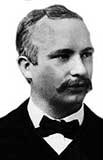
The idea was that of Peter J. McGuire, a union carpenter and cofounder of the Federation of Organized Trades and Labor Unions, a precursor of the American Federation of Labor.
|

|
| < Peter
J. McGuire, the carpenter and labor leader who conceived
of Labor Day |
| 1st
Labor Parade in Union Square, NYC 1882 |
| He wanted to honor the American worker and create a holiday break between the 4th of July and Thanksgiving, proposing a “festive parade through the streets of the city.” |
| Originally the second Tuesday of the
month, it is now the first Monday, and recognized as a national
holiday. |
| More
on the history and practice of Labor Day |
|
|
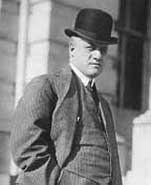
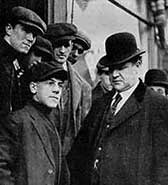
In 48 coordinated raids across the country, later known as the Palmer Raids, federal agents seized records, destroyed equipment and books, and arrested hundreds of activists involved with the Industrial Workers of the World (IWW), known fondly as the Wobblies.
|
|
|
Attorney
General Mitchell Palmer |
|
Big
Bill Haywood
|
| Among the arrested was William D. “Big Bill” Haywood, a leader of the IWW, for the “crimes of labor" and “obstructing World War I.” |
| An Italian anarchist’s bomb blew himself up on the porch of Attorney General Mitchell Palmer’s residence in Washington shortly after the discovery of 38 bombs mailed to leading politicians. |
| More on Attorney General Palmer |
|
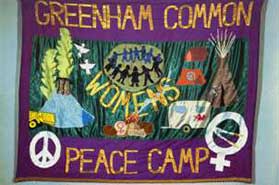
The Greenham Common Women's Peace Camp was established outside Greenham Air Base in England, as “Women For Life On Earth.”
|
|
|
|
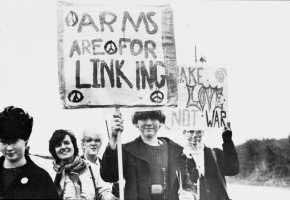 |
Greenham
Peace Camp
April,
1983. |
More on Greenham Common Women's Peace Camp |
|
|
All Jews over the age of six in German-occupied territories were ordered by the Nazi regime to wear a yellow Star of David on their clothing.
|
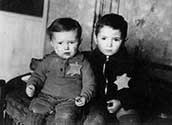 |
More about The Yellow Star |
|
|
Anti-nuclear marchers who began in Glasgow, Scotland, arrived in London and attempted to present a dummy missile to the British Imperial War Museum.
|
|
|
3,000
attended a rally to publicly launch the Peace Council
in Melbourne, Australia.
|
|
|
|
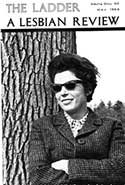
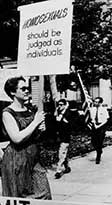
Barbara
Gittings organized the first New York meeting held
for the Daughters of Bilitis, a pioneer lesbian organization.
The group was founded two years earlier in San Francisco.
Barbara Gittings: Mother of the Gay Rights Movement
Cover
from their magazine "The Ladder", October,1968 |
|
| Barabara Gittings leading a picket in the '60s |
|
| Two British peace
activists, Stephen Hancock and Mike Hutchinson known as the Upper Heyford Plowshares were sentenced to
15 months in prison for disabling an F-111 bomber in Oxford,
England. |
A brief History of Direct Disarmament Actions |
|
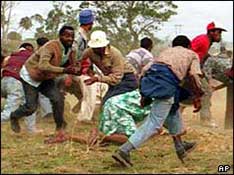
| South
African troops killed at least 24 people and injured 150
more at an African National
Congress (ANC) rally on the border of Ciskei, in South Africa.
50,000 ANC supporters had turned out to demand Ciskei’s
re-absorption into South Africa. Ciskei was one of ten black “homelands,” so
designated to keep blacks from claiming citizenship in South
Africa itself. They were a legal fiction, not recognized
by any other country, that was part of the racially separatist
apartheid regime. |
 |
| News at the time BBC |
|
Two
women were arrested for trespass at the Norfolk (Virginia)
Naval
Base after walking into the base with a banner reading,
"Love
Your Enemies." |
|
| Colonel John Armstrong
and troops under his command destroyed the Indian village of
Kittanning. The Corporation of the City of Philadelphia awarded
a silver medal to Armstrong and his officers for their action. |
|
|
In
Norway, 2000 workers in the shipyards went on strike
against diversion
of milk, "depriving mothers and babies," to military
use by the German soldiers in Finland. In retaliation,
Oslo was placed under a 7 o'clock nightly curfew, after
which transportation was stopped, public meetings prohibited,
radios seized, dancing forbidden. Boy Scouts, Girl Guides
and Salvation Army organizations were all dissolved.
|
More about the Milk strike |
|
|
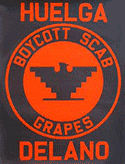
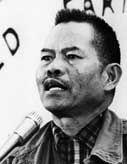
Table
grape pickers, the mostly Filipino members of the Agricultural
Workers Organizing Committee (AWOC), led by Larry Itliong,
went on strike for higher wages in Delano, California.
|
 |
| |
| Larry Itliong |
|
Minnesota
Governor Alexander Ramsey declared that "The
Sioux Indians of Minnesota must be exterminated or driven forever
beyond the borders of the state."
The previous month the Dakota, or Santee, Sioux, long burdened
by treaty violations and late or unfair payments from Indian
agents, killed four settlers and decided to attack settlers
throughout the Minnesota River valley. The number killed was
estimated between 300 and 800, until 9/11 the largest civilian
death toll in the U.S. The number of Indian deaths was not
recorded. |
|
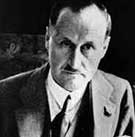
| Religious conscientious objector
Corbett Bishop was arrested after walking out of a Civilian
Public Service Camp. During subsequent trials and imprisonments,
he refused any type of cooperation with the government until
he was released 193 days later. |
 |
|
"I'm
not going to cooperate in any way, shape or form.
I was
carried in here.
If
you hold me, you'll have to carry me out.
War
is wrong. I don't want any part of it."
- Corbett Bishop, 1906-1961 |
|
| Students
at Chu Van An boys' high school in Saigon tore down the government
flag and raised a Buddhist flag to protest the corrupt Diem
regime in South Vietnam; 1,000 were arrested. |
|
|
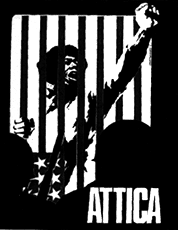
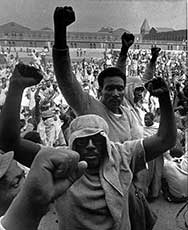
The Attica (New York) State Penitentiary revolt began.
The interracial revolt was led by blacks but featured cooperation
between prisoners of different racial and ethnic backgrounds. |
|
It
was finally brutally suppressed by the state five days
later, upon orders from Governor Nelson Rockefeller who refused
to become directly involved. 29 prisoners and 10 guards
were shot and killed by attacking state troopers in the
bloodiest prison confrontation in U.S. history. |
|
| The prisoners
had been demanding improvements in their living and working
conditions at the increasingly overcrowded facility. |
| Read
about Heather Anne Thompson's recent book "Blood in the Water: . . ." |
|
|
Eight
activists from the Atlantic Life Community were arrested
after hammering the nose cones
of two missiles at the General Electric plant in King of
Prussia, Pennsylvania.
Read
about Plowshares 8
|
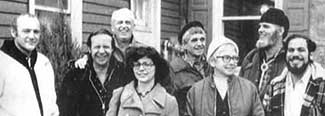 |
The Plowshares 8 (in alphabetical order):
Daniel Berrigan, Philip Berrigan, Dean Hammer, Carl Kabat, Elmer Maas, Anne Montgomery, Molly Rush, and John Schuchardt. |
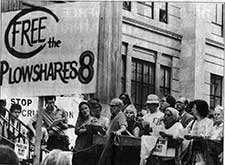 |
This
action would become the first of an international movement
of dozens of "Plowshares" anti-nuclear direct
actions.
A
chronology of Plowshares actions
|
|
| Sinn Fein
(pronounced shin fayn), the Irish Republican Army's allied
political party, formally renounced violence by accepting
the principles put forward by former U.S. Senator George
Mitchell (D-Maine) who was mediating the talks between the
Irish Republicans and the British Unionists on Northern Ireland's
future. |
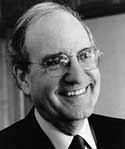 |
| Senator George Mitchell |
The
Mitchell Principles:
• To democratic and exclusively peaceful means of resolving political issues;
• To the total disarmament of all paramilitary organisations;
• To agree that such disarmament must be verifiable to the satisfaction
of an independent commission;
• To renounce for themselves, and to oppose any effort by others, to use
force, or threaten to use force, to influence the course or the outcome of all-party
negotiations;
• To agree to abide by the terms of any agreement reached in all-party
negotiations and to resort to democratic and exclusively peaceful methods in
trying to alter any aspect of that outcome with which they may disagree; and,
• To urge that "punishment" killings and beatings stop and to
take effective steps to prevent such actions. |
|
|
Nineteen
unarmed striking coal miners were killed and 36 more
wounded in Lattimer (near Hazleton), Pennsylvania, for
refusing to disperse, by a posse organized by the Luzerne
County sheriff. The strikers, most of whom were shot
in the back, were originally brought in as strike-breakers,
but later created their own union.
|
The
background and details |
|
|
Twenty
black students entered public schools in Birmingham,
Tuskegee and Mobile, Alabama. The Governor George C. Wallace
had ordered Alabama state troopers to stop the federal
court-ordered integration of Alabama’s elementary
and high schools. President John Kennedy responded by calling
out the Alabama National Guard to protect the students
and to see the order enforced.
President Kennedy spoke that day at American University’s
commencement, saying, "Peace need not be
impractical, war not inevitable . . . There is not peace
in many of our
cities because there is not freedom."
|
|
|

|
Sheryl
Crow's second album was banned from Wal-Mart stores because
the song she co-wrote with Tad
Wadhams, "Love Is A Good Thing" opens with
“Watch
out sister, watch out brother,
Watch our children while they kill each other
With a gun they bought at Wal-Mart discount stores....”
|
| Read more about this event and an update |
|
| Mohandas Gandhi, a young Indian lawyer, began a nonviolent
resistance campaign in Johannesburg, South Africa, demanding
rights and respect for those of Asian descent. It was the
birth of his concept of political progress through nonviolent
resistance known as Satyagraha, or truth-force. |
He led a meeting of 3000
of the town's Indians, protesting the Transvaal Asiatic
Law Amendment Ordinance. That law required all Asians to
obey three rules: those of eight years or older had to
carry passes for which they had to give their fingerprints;
they would be segregated as to where they could live and
work; new Asian immigration into the Transvaal would be
disallowed, even for those who had left the town when the
South African War broke out in 1899, and were returning.
|
|
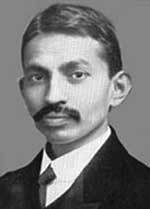
| Gandhi,
London, 1906 |
| The meeting produced the Fourth Resolution, in which all Indians
resolved to go to prison rather than submit to the ordinance. |
| In Gandhi’s
own words: |
|
|
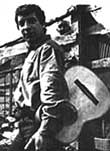
| Chile's armed forces staged a coup
d'etat against the government of President Salvador Allende,
the first democratically elected socialist head of state in
Latin America. Some three thousand were held in Santiago's
national stadium where guards singled out folksinger Victor
Jara as he continued to sing protest songs. Jara was viciously
beaten, and his mutilated body machine-gunned in front of the
other prisoners. |
 |
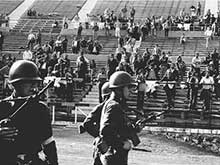 dissidents
held in the stadium dissidents
held in the stadium
|
Read
more on Victor Jara |
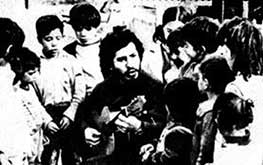 Victor
Jara plays to young supporters Victor
Jara plays to young supporters |
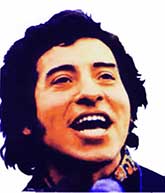
Victor
Jara
|
The U.S. government,
through the Central Intelligence Agency (CIA), had worked
for three years to foment the coup against Allende. Striking
Chilean labor unions, instrumental in destabilizing the
Allende government, were secretly bankrolled by the CIA.
During the brutal and repressive 17-year rule of General
Augusto Pinochet that followed, more than 3,000 political
opponents were assassinated or "disappeared." The
U.S.-backed military dictatorship banned Jara's music,
image, name and, for a time, even outlawed the public performance
of the folk-guitar. |
| More about the coup |
|
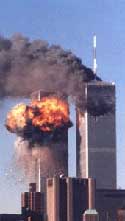 |
Suicidal
Islamist terrorists, members of Al Qaeda and most of them
Saudis,
hijacked four commercial airliners in the eastern U.S., and
managed successfully to turn three of the jet-fuel-loaded
planes into missiles: two flew into New York City’s
World Trade Center towers, destroying them, and a third into
the west side of the Pentagon. On the fourth, passengers
heroically seized back control but crashed it into an empty
field in western Pennsylvania. The hijackers killed nearly
3000 that day: passengers and crew, workers in the twin towers
and the Pentagon.
|
A 911 chronology |
|
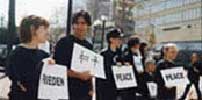
Women In Black (WIB) Baltimore started
the first Peace Path as a response to 9/11 World Trade
Center attacks. The nonviolent action presented images
of peace rather than war and militarism as a response to
problems.
Now in its seventh year, the path will extend
for 12 miles through Baltimore. Others are beginning to
create 9/11 peace paths in their own communities.
|
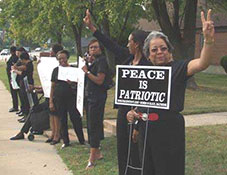 |
| Women
in Black along the peace path in Baltimore, 2007 |
| Participants in WIB
vigils wear black as a sign of mourning for all that is
lost through war and violence. The group seeks to bring
together people of all races, faiths, nationalities, and
genders who support positions of nonviolence and who seek
peace through mutual understanding and constructive dialogue. |
|
|
Steve
Biko, the leader of the black consciousness movement,
and probably the most influential young black leader
in South Africa, died while being held by security
forces in Port Elizabeth; he was the forty-first person
to die while in police custody in South Africa.
The Death of Stephen Biko
|

|
|
|
| A
group later known as the Cuban Five was arrested after
infiltrating groups which had previously executed terrorist
attacks on Cuban soil. |
They
were convicted of conspiracy to commit espionage against
the U.S. Their conviction
was overturned by a three-judge panel of the 11th Circuit Court,
then reinstated by the full court; an appeal to the Supreme
Court is planned.
The United Nations Commission on Arbitrary Detentions has characterized
their imprisonment as arbitrary detention. |
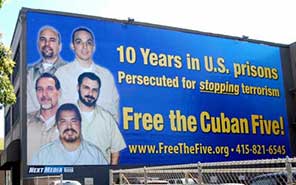 |
| Who are the Cuban 5? |
|
|
|
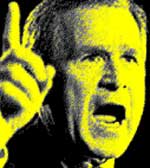
President
George W. Bush told skeptical world leaders at the United
Nations to confront the ''grave and gathering danger''
of Saddam Hussein's Iraq, or to stand aside as the United
States acted. |
| |
|
| A
group of the citizens of Oberlin, Ohio, stopped Kentucky
slavecatchers from kidnapping John Price,
a black man. Shakespeare
Boynton, son of a wealthy landowner had lured Price with
the promise of work. Oberlinians, black and white, from town
and from the local College, pursued the kidnappers to nearby
Wellington at word of his abduction. |
These were twenty of the thirty-seven citizens from Oberlin and Wellington who were charged with breaking the law by helping
John Price escape from slave catchers in the fall of 1858.
The Oberlin-Wellington Rescue and subsequent trial caught
the eye of the nation as escalating tensions over slavery
raised the prospect of civil war |
 |
The
group, led by Charles Langston, James M. Fitch, bookseller
and superintendent of the Oberlin Sunday School, and John
Watson, a grocer, wanted to proceed nonviolently, but when
the Kentuckians refused to surrender Price, the response
was "we will have him anyhow."
They
rushed the door guards of the Inn and theology student
Richard Winsor took Price to safety, hidden for a time
in the home of Oberlin College President James Fairchild,
later helped across the Canadian border to freedom. |
| The
Oberlin-Wellington Rescue |
|
| Bertrand Russell, aged
89, and 32 others were arrested during a major demonstration
against nuclear weapons in Trafalgar Square, London. |
|
| President
Richard Nixon, speaking to his Chief of Staff Robert
Haldeman, was recorded on the White House’s taping
system saying: "Now here's the point, Bob. Please
get me the names of the Jews. You know, the big Jewish
contributors to the Democrats. Could we please investigate
some of the cocksuckers?" |

Pres. Richard Nixon (L) with Chief of Staff Bob Haldeman, advisor John
Ehrlichman (R) with Sec. of State (standing) Henry Kissinger |
listen to The Smoking Gun: |
|
|
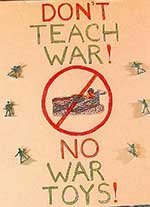
The European Parliament
voted to phase out promotion and advertising of war toys
throughout the 25 countries of the European Union (formerly
European Economic Community).
|
 |
|
The
first group from Peace Brigades International (PBI) arrived
in Guatemala to provide unarmed and nonviolent witness
protection for indigenous leaders. Following decades of
severe repression of native ethnic groups by the unelected
military government, the PBI team accompanied the Mutual
Support Group (GAM in Spanish) of Families of the Disappeared,
the first human rights group to emerge from the terror
and survive. |
PBI vision and mission |
|
 |
The
Prime Minister of Israel, Yitzhak Rabin, and the leader
of the Palestine Liberation Organization (PLO), Yasser
Arafat, shook hands before cheering crowds on the White
House lawn in Washington after signing an accord establishing
limited Palestinian autonomy. |
Read
more |
|
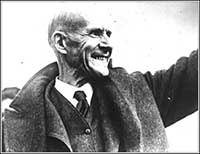 |
Eugene
V. Debs was sentenced to ten years in prison for opposing
U.S. entry into World War I. Debs had been an elected
official in Indiana, a labor organizer, writer and editor,
had founded the first industrial union in the U.S., the
American Railway Union, and had run for President four
times on the Socialist Party ticket.
|
|
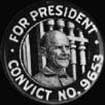
He
ran again for president from prison in 1920 with the
slogan “From Atlanta Prison to the White House,” and
received nearly one million.
Learn
more about Eugene V. Debs
|
|
|
|
|
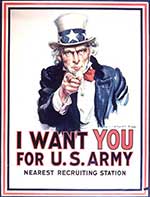
Congress
passed the Selective Service Act, providing for the first
peacetime draft (though Japan had already invaded China
in 1937 and Germany had invaded Poland and Czechoslovakia
in 1939) in U.S. history.
|
|
|
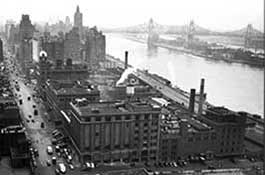
| A groundbreaking ceremony took place
in New York City at the site of the United Nations' world headquarters. |
|
The
39-story building on 18 acres of Manhattan’s Turtle
Bay neighborhood (donated by John D. Rockefeller, Jr.)
on the East River. It is a major expression of the International
Style with its simple geometric form and glass curtain
wall, designed principally by Le Corbusier.
|
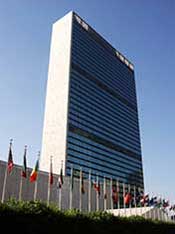 The
UN building today The
UN building today |
The site selected for the permanent
headquarters of the United Nations as it was in 1946. |
|
Background
and more examples of the minimalist, utilitarian International
style
|
|
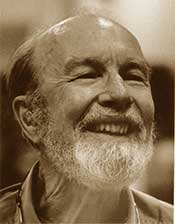
| The ABC television network invited
singer, songwriter, banjo player and activist Pete Seeger to
appear on its Saturday night folk and acoustic music show,
Hootenanny, despite the fact that he had been blacklisted. |
|
|
But
the invitation stood only if he'd sign an oath of loyalty
to the U.S. He described his reaction: "This is
ridiculous. I’d sign ’em, if you sign ’em,
and everybody who's born will sign ’em, then we’d
all be clean."
In the 1940s Seeger traveled throughout the country with
Woody Guthrie, performing at union meetings, strikes and
demonstrations. After World War II, he and Lee Hays co-founded
the Weavers, the legendary folk group that gained commercial
success despite being blacklisted. |
A Pete Seeger Biography |
More
about Hootenanny |
|
|
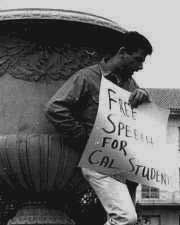 |
The
Free Speech Movement began at the University of California-Berkeley
when its Dean Katherine Towle (pronounced toll) announced
that existing University regulations prohibiting advocacy
of political causes or candidates, signing of members,
and collection of funds by student organizations at the
corner of Bancroft and Telegraph, would henceforth be ''strictly
enforced." |
 |
Read
more |
|
| Wisconsin
became the first to approve a statewide referendum calling
for a freeze on all testing of nuclear weapons. |
|
|
The
Pentagon announced a $20 billion arms sale to Saudi Arabia.
Saddam Hussein’s Iraq (Saudi Arabia’s eastern
neighbor) had invaded Kuwait six weeks earlier.
|
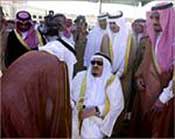 |
| Saud
royal family |
|
| The
South African government, the African National Congress,
the Inkatha Freedom Party, a total of forty organizations,
signed the National Peace Accord. It led to the country’s
first multi-racial elections and the end of South Africa's
racially separatist apartheid (literally separateness
in the Afrikaans language) political, economic and social
system by 1994.
“ Bearing
in mind the values which we hold, be these religious
or humanitarian, we pledge ourselves
with integrity of purpose
to make this land a prosperous one where we can all live, work
and play together in peace and harmony.”
|
Text of the National Peace
Accord |
Background
of the conflict |
|
In
a letter, Turkish Minister of the Interior Mehmet Talaat Pasha
explained that the real intention of sending the Armenians
to the Der-el-Zor (Deir el-Zor) Desert (now in Syria) was
to annihilate them. Talaat had primary responsibility for
planning and implementing the Armenian Genocide.
The day before, The New York Times reported that the murder
of 350,000 Armenians in Turkey had already occurred. |
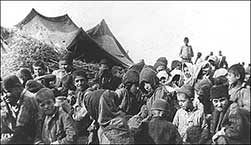 |
1915, orphaned Armenian children in the open,
many covering their heads from the desert sun.
Location: Ottoman
empire, region Syria. |
The Turkish Adolf Eichmann |
|
| The “Law for the Protection of
German Blood and German Honor” and the “Reich
Citizenship Law” were adopted by the Nazi (National
Socialist German Workers') Party Rally in Nuremberg, depriving
German Jews of their citizenship. |
|
During Sunday School, 15 sticks of dynamite blew apart the
Sixteenth Street Baptist Church in Birmingham, Alabama, killing
four children in the basement changing room, and injuring 23
others. Prime suspects were the Ku Klux Klan (KKK) and Nacirema
(both white supremacist organizations; Nacirema is "American" spelled
backwards).
A week before the bombing Governor George C. Wallace
had told The New York Times that to stop integration, Alabama
needed a "few first-class funerals."
|
 |
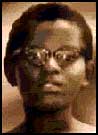
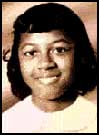
The
four girls lost in the Sixteenth Street Baptist Church
bombing,
the ruins of the church and grieving parents |
This event set off racial rioting and other violence in which two African-American
boys were shot to death, and became a turning point in generating broad American
sympathy for the civil rights movement.
A member of the church, studying on a
scholarship in Paris at the time, was Birmingham High School student Angela Davis. |
Lives
cut short...
Addie
Mae Collins (14), Cynthia Wesley (14), Caole Robertson
(14), Denise McNair (11)
Read
more
|
|
|
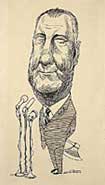
Vice
President Spiro Agnew said the youth of America were being "brainwashed into a drug culture" by
rock music, movies, books, and underground newspapers.
Agnew Assails Songs and Films That Promote a 'Drug Culture'
|
 |
|
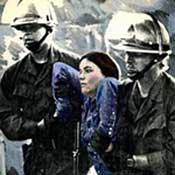
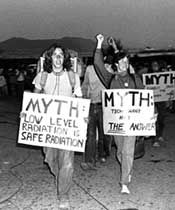
A
blockade started at a nuclear power plant construction
site in Diablo Canyon near San Luis Obispo, California.
Nearly 10,000 people tried to prevent fuel rods from being
loaded into the two reactor cores. Over two weeks, 1,901
are arrested in the largest occupation of a nuclear power
site in U.S. history.
|
 |
Their
immediate major concern was over the region being seismically
active and the plant’s location near the Hosgri fault.
In
2004 a 6.5 (on the Richter Scale) earthquake was centered
less than 40 miles from the plant. Four other faults nearby
have since been identified. |
 |
Additionally, 9.5 billion liters (2.5 billion gallons) of
water needed to cool the reactors each day are discharged
directly into the Pacific 11°C (20°F) warmer than
the surrounding ocean water, affecting marine plant and animal
life there.
|
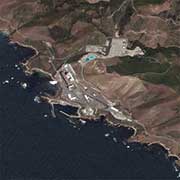 |
| Diablo canyon |
| As
with all nuclear plants, the problem remains with storage
of spent nuclear fuel that remains dangerously radioactive
for more than 10,000 years. Diablo Canyon generates 110
spent fuel rod assemblies each year. There is still no
satisfactory solution to this long-term storage problem. |
| Diablo Canyon
timeline |
|
|
Veterans
Duncan Murphy (World War II) and Brian Willson (Vietnam)
joined Charles Liteky & George Mizo in the Fast For
Life, opposing U.S. support for the terrorist contra
war against Nicaragua. The contras were insurgent guerillas
using violence against civilians in the countryside to
bring down the newly formed Sandanista government.
The contras were supported in contravention of the Boland
Amendment which prohibited U.S. agencies from providing military
equipment, training or support to anyone "for the purpose
of overthrowing the Government of Nicaragua." |
|
Duncan
Murphy, Brian Willson, Charles Liteky, George Mizo
The Fast for Life from Brian Willson’s perspective |
|
| 6,000 rallied and 1,033 were arrested near the Headwaters
Grove in rural Carlotta, California, in protest against cutting
one of the last large unlogged stands of redwood trees in
the world.
|
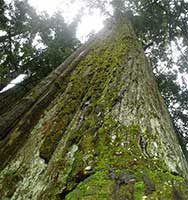 |
Redwoods
are coniferous trees (sequoia
sempervivens: the genus is named for Sequoya, or George
Guess, an American Indian scholar; sempervivens is ever
alive in Latin) that can reach over 90m
(300 ft.) over a life as long as 2000 years. |
|
Sinn
Fein, the political party closely allied with the goals
of the Irish Republican Army (IRA), entered Northern
Ireland's peace talks for the first time.
|
|
|
|
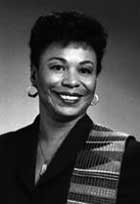
Four
days after 9/11, Representative Barbara Lee
(D-California)
cast the only congressional vote against authorizing President
Bush to use "all necessary and appropriate force" against
anyone associated with the terrorist attacks of September
11. "I am convinced that military action will not prevent
further acts of international terrorism against the United
States.”
Barbara Lee - Alone on the Hill
|
|
William
Whipper, a wealthy negro from Lancaster County, Pennsylvania,
published "An Address on Non-Resistance to Offensive
Aggression" in the The Colored American, outlining his
commitment to a strictly non-violent response to the evils
of slavery. This landmark essay predated Thoreau's on “Civil
Disobedience” by 12 years.
“
...fatal
error arises from the belief that the only method of maintaining
peace, is always to be ready for war.”
|
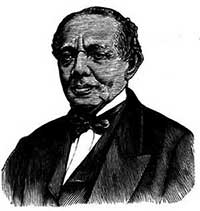 |
| William Whipper |
| Whipper edited a newspaper, The National Reformer, a publication
of the National Moral Reform Society, and furnished food and
transportation assistance to fugitive slaves who reached Pennsylvania. |
A biography of William Whipper |
|
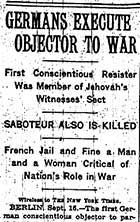
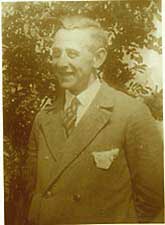
August
Dickmann, a German and a Jehovah's Witness, became the
first conscientious objector (CO) to be executed by the
Nazis during World War II. The execution by firing squad
took place in Sachsenhausen concentration camp before all
prisoners, including 400 Jehovah's Witness inmates.
|
|
|
Though
threatened by Commandant Hermann Baranowsky with the
same fate, none of the remaining 400 Witnesses renounced
their CO position. Later, the Nazis commonly executed
Witnesses by guillotine or hanging, not wanting to spend
bullets on COs. German military courts sentenced and
executed 270 Jehovah's Witnesses, the largest number
of COs executed from any victim group during World War
II. |
|
NY
Times, Sept 16, 1939 |
August
Dickmann |
He Died for a Principle |
|
A
federal judge dismissed all charges against American
Indian Movement (AIM) leaders Dennis Banks
and Russell Means stemming from the 1973 occupation of
Wounded Knee, South Dakota. |

Dennis
Banks
|

Russell
Means
|
On February 27, 1973, AIM and supporters
seized control of Wounded Knee to draw attention to corruption
and conditions on the Pine Ridge (Lakota Sioux) reservation.
Wounded
Knee was the site where, on December 29, 1890, over 200
Sioux men, women and children were mercilessly gunned
down by U.S. cavalry. |
| We Shall Remain |
The Legacy of Wounded Knee |
|
| President
Gerald Ford announced a conditional amnesty program for
Vietnam War deserters and draft-evaders, provided they
swear allegiance to the country and agree to work two
years in the branch of the military they had abandoned.
He did this one month following his pardon of resigned
former President Richard Nixon. |
|
The
Philippine Senate rejected a treaty allowing continued
operation of U.S. military bases in the Philippines. The
Americans had occupied the Philippines since 1898 (except
after surrendering control to the Japanese in 1942 until
the end of World War II), though on a “temporary” basis.
More than two dozen U.S. military installations were established
in the country, even after independence in 1945, notably
Clark Air Base and the naval station at Subic Bay, the
largest U.S. military installations in Asia.
|
|
|
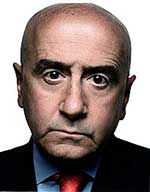
New York Stock Exchange Chair Dick Grasso resigned amid
a furor over his compensation package that would reach $139.5
million in one year.
|
 |
The details of the plan and the reaction |
| Dick
Grasso |
|
Mohandas
Gandhi began a purifying 21-day fast for Hindu-Muslim tolerance
and unity following communal riots in Kohat on India’s
northwest border in what is now Pakistan. A Hindu, Gandhi
spent his fast at the home of Mahomed Ali. |
A
Gandhi chronology |
|
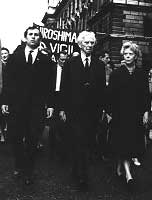 |
1,314
anti-nuclear protesters were arrested during a sit-down
in London’s
Trafalgar Square by 12,000 (authorities had denied a permit).
Philosopher and peace activist Bertrand Russell, aged 89,
and 32 others were already in jail, having been arrested
the previous month during a demonstration on Hiroshima Day
in Hyde Park.
|
| Bertrand
Russell at anti nuclear weapons March, 1961. |
Russell’s Committee of 100 had organized the sit-down
and other actions to resist nuclear weapons, challenging the
authorities to ‘fill the jails’, with the intention
of causing prison overload and large-scale disorder. On arrest
members would go limp so as to create maximum disruption without
conflict. |
|
Haiti's
military government was overthrown by a group of non-commissioned
officers who installed Lieutenant General Prosper Avril as the
new head of state. The leaders of the coup were outraged
by the attack the previous Sunday on St. Jean Bosco Church
during which 13 parishioners were killed and nearly 80
injured. Fr. Jean-Bertrand Aristide, a persistent critic
of the military regime, had been celebrating mass when
the attack occurred.
From the report of the Organization of American States’ Inter-American
Commission on Human Rights, issued on September 7, 1988:
“ The
Commission has come to the conclusion that the current military government in
Haiti has perpetuated itself in power
as a result of violence instigated by elements of the Haitian
Armed forces resulting in the massacre of Haitian voters on
November 29, 1987, the manipulation of the elections held on
January 17, 1988, and the ouster of President Leslie Manigat
on June 20, 1988.”
|
The
full report |
|
|

|
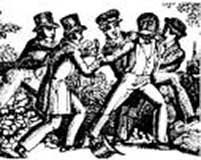
Congress passed the Fugitive Slave Act,
allowing slave owners to reclaim slaves who escaped into
another state, and levying harsh penalties on those who would
interfere with the apprehension of runaway slaves. |
|
| As part of the Compromise of 1850, it offered federal officers a fee for each captured slave and denied the slaves the right to a jury trial. |
The
Compromise of 1850 |
|
| African-American
educator (founder of the Tuskegee Institute) and leader (born
a slave) Booker T. Washington spoke before a predominantly
white audience at the Cotton States and International Exposition
in Atlanta. Although the organizers of the exposition worried
that “public sentiment was not prepared for such an advanced
step,” they decided that inviting a black speaker would
impress Northern visitors with the evidence of racial progress
in the South. Washington, in his “Atlanta Compromise” address,
soothed his listeners’ concerns about “uppity” blacks
by claiming that his race would content itself with living “by
the productions of our hands.” |
| Text
of the speech |
|
Earl Bertrand
Russell and Lady Edith Russell were released from prison after
serving one week of their two-month sentences.
They had been
part of a Hiroshima Day vigil in Hyde Park, and were accused
of inciting civil disobedience.
|
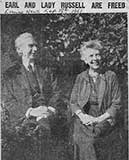 |
Bertrand and Edith Russell after
being release from prison. |
|
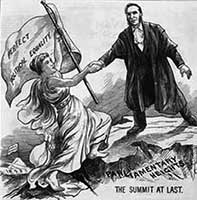
With
the signing of the Electoral Bill by Governor Lord Glasgow,
New Zealand became the first major country in the world
to grant national electoral rights to women. The bill was
the outcome of years of suffragist meetings in towns and
cities across the country, with women often traveling considerable
distances to hear lectures and speeches and pass resolutions. |
 |
| Read
more about New Zealand’s efforts |

|
Organizer
Kate Sheppard delivered to parliament a petition signed
by a quarter or more of all the women in the country. New
Zealand women, both the native Ma¯ori and Päkehä (Anglo-European
or non-Maori), first went to the polls in the national
elections in November of 1893.
The United States granted women voting rights in 1920,
and Great Britain didn’t guarantee full voting rights
until 1928.
Kate
Sheppard, a leader of the New Zealand suffragette movement |
| Kate
Sheppard, a leader of the New Zealand suffragist movement |
| A
timeline of Women’s Suffrage in the U.S. |
|
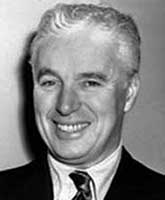
| The United
States prevented Charlie Chaplin, the groundbreaking British director,
actor and producer, from returning to his Hollywood home
until he had been investigated by Immigration Services.
He had lived and worked in the U.S. more than thirty years. |
He had been on the FBI's Security Index since 1948, and
was one of over 300 people blacklisted by Hollywood film
studios.
Chaplin was unable to work after refusing to cooperate during
his appearance before the House Un-American Activities Committee
(HUAC). Informed that he would not necessarily be welcomed
back, he retorted, "I wouldn't go back there if Jesus
Christ were president," and surrendered his U.S. re-entry
permit in Switzerland. |
|
| Charlie
Chaplin |
| Chaplin’s
FBI files |
Charlie
Chaplin: "My prodigious sin was, and still is,
being a non-conformist.
Although
I am not a Communist I refused to fall in line by
hating them." |
|
|
The United States conducted its first underground nuclear test,
called Rainier, in the Nevada desert under the leadership
of Edward Teller.
|
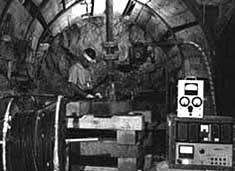 |
| Tunnels at the Nevada Test
Site were used to conduct contained underground nuclear tests,
such as the RAINIER event in 1957. |
|
After
300 members of Grenada, Mississippi’s white community
called for “an end to violence,” hundreds
of Negro schoolchildren were allowed to integrate the
local public schools. The leaders of the vicious organized
attack on the kids the previous week (including the town’s
justice of the peace) had been arrested by the FBI, and
the mobs were gone, but the children were all escorted
to school by community members, or driven in cars for
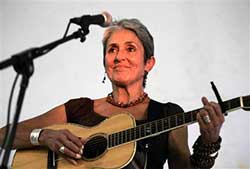
safety. Folksinger Joan Baez had been in Grenada the
previous week lending support and running the same risks
as Grenadans struggling against the segregationist way
of life.
Grenada
Mississippi in 1966 |
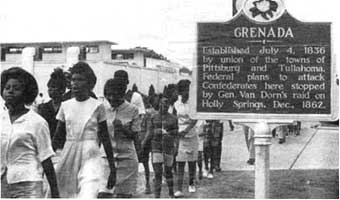
Marching
strong and proud
in
Grenada, Mississippi, 1966 |
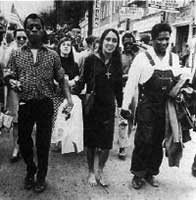
On the front line at the March from Selma to Montgomery, Alabama, 1965.
James
Baldwin, Joan Baez, and James Forman (left to right) |
 |
More than forty years later
year Joan is still playing for peace and justice. She performed
at Camp Casey in support of Cindy Sheehan and her protest
against the war in Iraq in Crawford, Texas.
|
 |
 |
Joan Baez pin |
| 1" diameter - satin finish |
| Union printed - made in Detroit. |
 |
|
|
|
A
group of 22 eminent U.S. scientists, including seven Nobel
laureates, urged President Lyndon Johnson to halt the use
of anti-personnel and herbicidal chemical weapons in Vietnam.
That same day in Congress, House Republicans issued a “white
Paper" warning the United States was becoming "a
full-fledged combatant" in a war that was becoming "bigger
than the Korean War." The paper urged the President
to end the war "more speedily and at a smaller cost,
while safeguarding the independence and freedom of South
Vietnam."
|
|
| A
lawsuit was filed which would become "University of California Regents v. Bakke," a
groundbreaking claim of "reverse discrimination" by
a white prospective student (Allan Bakke) passed over for
admission to the UC-Davis Medical School allegedly due to
the school’s affirmative action program. |
|
|
Some
5,000 marched in a nighttime procession through Seattle's
Capitol Hill neighborhood, mourning the dead of September
11, and calling for a non-military response by the U.S. |
|
|
The
National Negro Convention, a group of 38 free black Americans
from eight states, met in Philadelphia, Pennsylvania,
with the express purpose of abolishing slavery and improving
the social status of African Americans. They elected
Richard Allen president and agreed to boycott slave-produced
goods and encourage free-produce organizations. One of
the most active would be the Colored Female Free Produce
Society, which urged the boycott of all slave-produced
goods.
Read
more
|
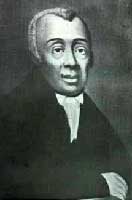
Richard
Allen |
|
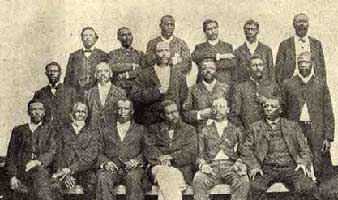
National
Negro Convention leaders 1879 |
|
| The District of
Columbia abolished the slave trade though slavery itself was
not outlawed. Washington had been home to the
largest slave market in the country. This was an element
of the Compromise of 1850. |
The Compromise of 1850 and
the Fugitive Slave Act |
|
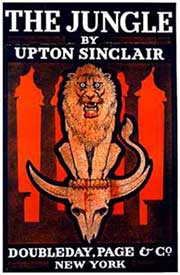
| Upton
Sinclair's “The Jungle,” a
realist novel, was published, exposing the dangerous conditions
and deplorable sanitation in Chicago’s meat-packing
plants. Reaction from readers was intense, including President
Theodore Roosevelt who coined the term "muckrakers" to describe
Sinclair, Lincoln Steffens, Ida Tarbell and other writers
who exposed corruption in government and business [what we’d
now call investigative reporting]. |
 |
"The men with the muck-rakes are often indispensable to the well-being of society ...
if they gradually grow to feel that the whole world is nothing
but muck, their power of usefulness is gone."
— Theodore Roosevelt |
| More
on the muckrakers |
|
Rabindranath
Tagore urges resistance to practice of "untouchability," British
India.
|
|
The
first Cannes Film Festival began in that French Riviera
resort
town. It had originally been planned for 1939 but Hitler’s
invasion of Poland that year, and later France, delayed plans
until after the war.
The first Grand Prix and the International Peace Prize were
awarded to “The Last Chance” by Leopold Lindtberg
of Switzerland, a movie (shot on location) about how three
Allied soldiers, including two escaped prisoners of war, lead
a group of Jewish refugees from Nazi-occupied northern Italy
across the Alps to safety in nominally neutral Switzerland. |
| Cannes festival history |
|
3,000 protesters helped to rip up the railroad tracks
leading from Krummel nuclear power station to the main Hamburg-Berlin
line. The previous year two doctors had sued for closure
of the plant due to the increased incidence of leukemia among
the population around the plant.
In January, a train carrying nuclear waste derailed near
the reactor at Krummel.
At the time, Germany’s 19 nuclear
reactors generated 34 per cent of the country’s electricity;
in 2005 it was down to 26 percent. |
|
| A
multinational peacekeeping force landed in East Timor in
an attempt to restore law and order to the territory. Indonesian
militias had killed thousands following the overwhelming vote by the East Timorese for independence from Jakarta
on September 4. |
|
|
The
War Resisters League organized the first American anti-Vietnam
War demonstration in New York City. The League, founded
in 1923, was the first peace group to call for U.S. withdrawal
from Vietnam, and played a key role throughout the war,
organizing rallies, the burning of draft cards, civil
disobedience at induction centers, and assisting resisters. |
History
of WRL |
|
WRL
home |
|
September
21st (since 1982)
|
|
|
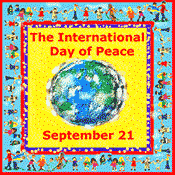
The
International Day of Peace was established by United
Nations resolution in 1981 and first celebrated in 1982
(then as the 3rd tuesday of the month).
Events are planned all over the world to promote peace and make it more
visible.
|
| About
Peace Day and plans around the world |
|
|
Eight
hundred Puerto Rican men pledged in Lares to refuse U.S.
Vietnam draft. They saw compliance as "part of the
colonial subjugation of our country."
|
|
| The Solidarity
union under leadership of Lech Walesa was allowed to organize
by the Communist-led Polish government. The previous month
the group had occupied the Lenin shipyards in Gdansk and
had inspired a national general strike. |
|
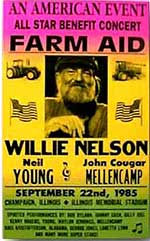
The first Farm Aid concert, organized principally
by Willie Nelson, was held with more than 50 musicians
raising $9 million for debt-ridden U.S. farmers.
Farm Aid home
|
 |
|
| President
Harry Truman announced that the Soviet Union had exploded
its first atomic bomb, an implosive plutonium weapon,
the previous month (it had happened on August 29). "We
have evidence," the White House statement said, "that
within recent weeks an atomic explosion occurred in the U.S.S.R." |
|
|
|
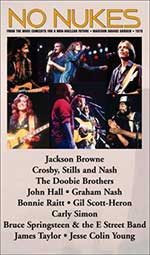
200,000
attended an anti-nuclear rally in New York City’s
Battery Park. It was the largest political protest
of
the late '70s in the U.S., six months after the partial
meltdown of the nuclear reactor at Three Mile Island,
Pennsylvania. Two days earlier the 'No Nukes' concert,
also known as the “Muse (Musicians United for Safe
Energy) concert,” was held in Madison Square Garden,
featuring Bruce Springsteen, Crosby Stills & Nash,
Jackson Browne and others. |
More about the concert, the record and the film |
|
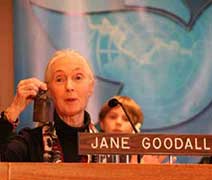
| Dr.
Jane Goodall created Roots & Shoots Day of Peace
in 1982 in honor of U.N. International Day of Peace; each year,
Roots & Shoots Day of Peace is observed in late September.
Roots & Shoots groups around the world fly Giant Peace
Dove puppets to celebrate Roots & Shoots Day of Peace for
its symbolic meaning. They also plan and implement peace project
initiatives to help make the world a better place for animals,
the environment and the human community. |
Hear
Jane Goodall
on
World Peace Day
(needs
RealPlayer) |
Dr.
Goodall was appointed a Messenger of Peace in 2002 by U.N.
Secretary-General Kofi Annan. People selected as Messengers
of Peace are widely recognized for their achievements in
music, literature, sports and the arts. |
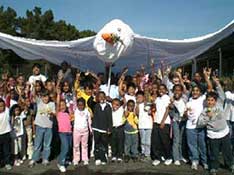 |
To
commemorate her appointment, Roots & Shoots members
at the University of Wisconsin-Stevens Point first conceived
of and created the Giant Peace Dove puppets. Since then,
Roots & Shoots groups have flown doves in over 40 countries
around the world. |
Students with their peace dove - Northern Light School, California
|
|
|
|
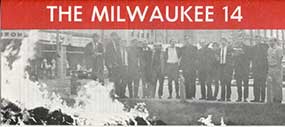
10,000
draft files were destroyed by fourteen anti-war activists
with homemade napalm in Milwaukee, Wisconsin.
Milwaukee 14 home
Watch
a video of the event
|
|
The
Chicago 8 trial opened in Chicago. It was the prosecution
of eight anti-war activists charged with responsibility
for the violent demonstrations at the August 1968 Democratic
National Convention in Chicago.
|
The
defendants included David Dellinger of the National Mobilization
Committee (NMC); Rennie Davis and Thomas Hayden of the
Students for a Democratic Society (SDS); Abbie Hoffman
and Jerry Rubin, founders of the Youth International
Party ("Yippies"); Bobby Seale of the Black
Panther Party; and two lesser-known activists, Lee Weiner
and John Froines. |
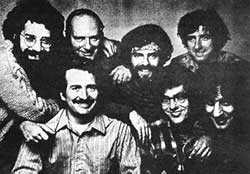 |
| The
Chicago 8 minus Bobby Seale |
Chicago 8 background |
|
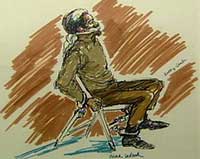
Bobby
Seale, after repeatedly asserting his right to an attorney
of his own choosing or to defend himself, was bound and
gagged in the courtroom and his trial was severed from
the rest on November 5th. The group then became know
as the Chicago 7.
|
About Bobby Seale |
Bobby Seale home |
|
| Ian Smith, leader of the whites-only government of Rhodesia,
a former British colony, agreed to introduce black majority
rule to the country within two years. He was under pressure
from the United States through Secretary of State Henry Kissinger,
and from British Prime Minister James Callaghan. |
|
The first U.S.
Congress passed the Bill of Rights, the first ten amendments
to the Constitution, and sent them on to the states for ratification. |
See the actual document and learn more |
|
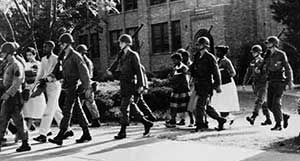
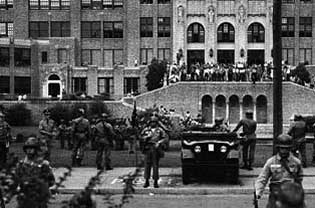
Nine
African-American children, protected by 300 members of
the U.S. Army's 101st Airborne Division, with fixed bayonets,
entered the previously all-white Central High School
in Little Rock, Arkansas. |
|
The troops were there to escort
the children past white segregationists and the Arkansas
Militia (National Guard) thatArkansas Governor Orval Faubus had activated to prevent its federal court-approved
racial integration plan.
|
|
|
After
a tense standoff, President Dwight D. Eisenhower federalized
the Arkansas National Guard and sent troops to Little
Rock to enforce the court order. The order to de-segregate
the Little Rock schools flowed from the Supreme Court’s
Brown v. Board of Education decision.
The troops remained for the entire school term. |
Watch a video about the Little Rock 9
|
|
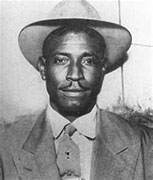
| Herbert
Lee, a farmer who worked with civil rights leader Bob Moses
to help register black voters, was killed by a state legislator,
E. H. Hurst, in Liberty, Mississippi. Hurst claimed self-defense
and was acquitted by a coroner's jury the same day as the
killing. Lewis Allen, who witnessed the shooting, said
otherwise, and was himself murdered two years later. |
 |
| Herbert Lee |
More about Herbert Lee
|
|
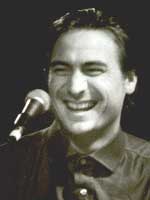
Rick DellaRatta and Jazz For Peace performed at the United Nations Headquarters in New York City. He led a band consisting of Israeli, Middle Eastern, European, Asian and American jazz musicians in concert for an international audience.
Jazz for Peace continues to perform concerts to raise money for non-profit organizations. |
 Rick
DellaRatta Rick
DellaRatta |
|

|
International
Ladies' Garment Workers Union (ILGWU Local 25) began
a strike against the Triangle Shirtwaist Company.
In November their strike would become part of the "Uprising of the
20,000," during which 339 of 352 firms would be struck and reach
agreements with the union over the following five months but Triangle
was not one of them. The strike ended after thirteen weeks that saw
over 700 striking workers arrested. |
| More info |
Chronology |
|
| OSS
(Office of Strategic Services, the precursor of the CIA)
officer Lieutenant Colonel A. Peter Dewey became the first American
to die in Vietnam. During unrest in Saigon, he was killed
by Viet Minh guerrillas who mistook him for a French officer.
Before his death, Dewey had filed a report on the deepening
crisis in Vietnam, stating his opinion that the U.S. "ought
to clear out of Southeast Asia." |
|
 |
Despite
international protests, the United Kingdom began a series
of atmospheric nuclear bomb tests beginning with Operation
Buffalo on aboriginal land
at Maralinga, South Australia.
The series of tests included dropping a bomb from a height
of 30,000 feet. This was the first launching of a British
atomic weapon from an aircraft.
The
Buffalo Nuclear Test, Maralinga
|
|
Five
members of Puget Sound Women's Peace Camp entered Boeing's
cruise missile production plant in Seattle, Washington,
to leaflet the workers and were arrested.
In
November of 1980 and 1981 the Women's Pentagon Actions,
where hundreds of women came together to challenge patriarchy
and militarism, took place. |
|
A movement grew that found
ways to use direct action to put pressure on the military
establishment and to show positive examples of life-affirming
ways to live together. This movement spawned women's
peace camps at military bases around the world from Greenham
Common, England, to the Puget Sound Peace Camp, as well
as camps in Japan and Italy, among others.
|

|
|
| President
Ronald Reagan urged the United Nations General Assembly to
call a conference about the use of chemical weapons. Though
the U.S. and other nations had signed the Geneva Protocol
banning chemical (as well as bacteriological) arms, such
weapons had been used repeatedly by Saddam Hussein’s
Iraq in its war against Iran. |
Background
on the treaty and the issue |
|
Rachel Carson's book indicting
the pesticide industry, Silent Spring, was published. |
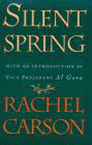
|
The
scientist (17 years with the U.S. Fish and Wildlife Service)
and writer demonstrated the connection between the excessive
and ubiquitous use of DDT and its long-term effect on plants
and animals. |
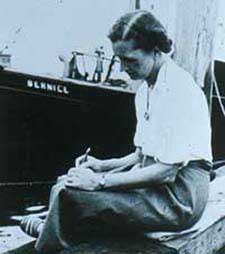
Rachel
Carson at work c. 1936 |
| The
impact of her book proved seminal to a new ecological awareness.
But
even 30 years later, Carson was denounced for “preservationist
hysteria” and “bad science.” But she had
said when the book was published: "We do not ask that
all chemicals be abandoned. We ask moderation. We ask the
use of other methods less harmful to our environment." |
| Rachel
Carson, her Silent Spring and its impact |
|
| An
advertisement headed "A Call To Resist Illegitimate
Authority," signed by over 320 influential people
(professors, writers, ministers, and other professional
people), appeared in the New Republic and the New York
Review of Books, asking for funds to help youths resist
the draft. |
|
|
The
last U.S. Pershing II tactical nuclear missiles were
removed from Germany, fewer than ten years after their
installation provoked a massive anti-nuclear movement
across Europe.
|
 |
The
range and accuracy of the Pershing II pushed the Soviet
Union to negotiate the Treaty on Intermediate Range Nuclear
Forces (INF) which completely eliminated all nuclear-armed
ground-launched ballistic and cruise missiles with ranges
between 500 and 5,500 kilometers (about 300 to 3400 miles)
and their infrastructure.
German
Anti Pershing missile demonstration poster, 1983. |
The INF Treaty was the first
nuclear arms control agreement to actually reduce nuclear
arms, and the signatories destroyed almost 2700 nuclear
weapons (including 234 Pershing II) by May of 1991. |
|
President
George H.W. Bush announced a major unilateral withdrawal
of U.S. tactical nuclear weapons:
"I am . . . directing that the United States eliminate its entire
worldwide inventory of ground-launched short-range, that is,
theater, nuclear weapons. We will bring home and destroy all
of our nuclear artillery shells and short-range ballistic missile
warheads. We will, of course, insure that we preserve an effective
air-delivered nuclear capability in Europe.
"In turn, I have asked the Soviets . . . to destroy their entire
inventory of ground-launched theater nuclear weapons . . .
.
"Recognizing further the major changes in the international
military landscape, the United States will withdraw all tactical
nuclear weapons from its surface ships, attack submarines,
as well as those nuclear weapons associated with our land-based
naval aircraft. This means removing all nuclear Tomahawk cruise
missiles from U.S. ships and submarines, as well as nuclear
bombs aboard aircraft carriers." |
|
Cherokee Chief
John Ross wrote a letter to both houses of the U.S. Congress
stating that the Treaty of New Echota was not negotiated
by any legitimate representatives of his nation.
Its terms
required the Cherokees to relinquish all lands east of the
Mississippi River for a payment of $5 million. Ross was the democratically chosen leader of a nation with
its own language, its own newspaper, a bi-cameral legislature
and a republican form of government.
|
 |
| Cherokee Chief John Ross |
| The Cherokee Nation celebrated
its own arts and sports, and produced a wide variety of agricultural
and commercial goods. I had twelve political units ranging
from northern Alabama to western North Carolina. |
Writing from north Georgia, Ross said: “The makers of it [the treaty] sustain no office nor appointment
in our Nation, under the designation of Chiefs, Head men, or any other title,
by which
they hold, or could acquire, authority to assume the reins of Government, and
to make bargain and sale of our rights, our possessions, and our common country
. . . .
“ We are despoiled of our private possessions, the indefeasible property
of individuals. We are stripped of every attribute of freedom and eligibility
for legal self-defence.
Our property may be plundered before our eyes; violence may be committed on our
persons; even our lives may be taken away, and there is none to regard our complaints.
We are denationalized; we are disfranchised. We are deprived of membership in
the human family!” |
| Full
text of the letter |
More
on the Treaty and the Cherokee nation |
|
166
people who were (or had been) active in the I.W.W. (Industrial
Workers of the World, whose members were also known as
Wobblies) were indicted for protesting World War I. |
They
were accused of trying to "cause insubordination,
disloyalty, and refusal of duty in the military and naval
forces" in violation of the Espionage Act. One hundred
and one defendants were found guilty, and received prison
sentences ranging from days to twenty years, with accompanying
fines of $10,000-$20,000. This was part of a successful
U.S. government campaign to cripple the radical union movement. |
 |
The I.W.W. - A Brief History (U.S.) |
I.W.W. home |
 |
IWW logo pin |
| 1" diameter - satin finish |
| Union printed - made in Detroit. |
|
|
|
In
Denmark, underground anti-Nazi activists began systematic
smuggling of Jews to Sweden. In just three weeks, all
but 481 of Denmark's 8000 Jews had been moved to safety.
|

|
<
Kim Malthe-Bruun, a 21-year-old
Danish resistance fighter.
Unfortunately one of the ones who did not make it.
|
 |
A
Danish Jewish family ready to go> |
Read
more about Kim |
|
| The
lawyer who wrote the original legal complaint in the case
of Brown v. Board of Education, Constance Baker Motley, died
in New York City. She had led a remarkable career which began
at the NAACP Legal Defense and Educational Fund (LDF) where
she was their first female attorney. The first black woman
to argue before the Supreme Court, she was successful in
nine of her ten cases. Motley went on to achieve three more
firsts as an African American woman: being elected to the
New York State Senate and shortly thereafter to the Manhattan
Borough presidency. Finally, Pres. Lyndon Johnson appointed
her to the U.S. District Court for the Southern District
of New York in 1966 where she served until her passing. |
|
| Great Britain began to govern the formerly Turkish province
of Palestine under a League of Nations mandate to create
a Jewish national home. |
The
British Mandate For Palestine established at the San Remo
Conference, 1920 |
|
Six
conscientious objectors, imprisoned at Lewisburg, Pennsylvania,
for refusing to serve in World War II, began a hunger strike
against censorship of mail and reading material by federal
prison authorities. |
|
The municipal council of Woensdrecht, a southern Dutch town,
voted against cooperating in the possible siting of 48 U.S.
nuclear-tipped cruise missiles at the nearby air base.
The council voted Tuesday by 9 to 4 not to cooperate with the
national government, and to stop any activities that might
lead to the missiles being sited at the base. |
|

|
A London crowd - estimated between 200,000 and 500,000 - protested
British and U.S. plans for a "preemptive" (that is,
without provocation) invasion of Iraq. |
|
Hundreds
of Ku Klux Klan members, white students and others, tried
to keep a black student, James Meredith, 29, from attending
classes at the University of Mississippi in Oxford. They
were supported by the governor, Ross Barnett, who had explicitly
resisted the order of the Federal Circuit Court. |
In
spite of the efforts to block his court-ordered registration,
a deal to allow Meredith to register was reached between
U.S. Attorney General Robert Kennedy and Governor Barnett.
Meredith was secretly escorted onto campus; deputy U.S.
marshals, border patrolmen and federal prison guards were
stationed on and around the campus to protect him. Those
standing guard were assaulted throughout the night with
guns, bricks, Molotov cocktails, and bottles.
|
 |
James
Meredith being escorted to his classes
by U.S.marshals and the military. |
Tear
gas was used to try and control the crowd. Federal troops
arrived, bringing the total to 12,000 (President Kennedy had
activated soldiers and national guardsmen totaling 30,000),
and the mob finally retreated. In the end, two were dead,
160 U.S. Marshals were injured (28 shot), 200 others injured,
and 300 arrested. |
|
The
FBI began a criminal investigation into whether White House
officials had illegally leaked the identity of an undercover
CIA officer, Valerie Plame, wife of diplomat Joseph C.
Wilson, IV. In early 2002 the CIA had sent Wilson to look
into the claim that Saddam Hussein had sought to acquire
yellow-cake uranium from the African country of Niger.
Ambassador Wilson found nothing to support the claim, and
some of the documents cited as evidence for the claim were
clearly shown to be forgeries.
President Bush, nonetheless, repeated the claim in his January,
2003, State of the Union address as part of his argument for
war in Iraq.
Wilson wrote a column in the New York Times in July, 2003,
entitled “What I Didn’t Find in Africa.” |
Columnist
Robert Novak a few days later published Plame’s identity
following conversation with Deputy Secretary of State Richard
Armitage. Plame, who previously had worked on counter-proliferation,
was in charge of operations for the CIA’s Joint Task
Force on Iraq, formed the summer before 9/11. |
|
| The
U.S. Navy announce the shutdown of Project ELF. |
read more |
|
|
September
1 2 3
4 5 6
7 8 9
10 11 12
13 14 15
16 17 18
19 20 21
22 23 24
25 26 27
28 29 30
visit
another month
Jan
• Feb
• March • April
• May • June
• July
• Aug • Sept
• Oct • Nov
• Dec |
If
you are not already on our email list and would like to have this
free
calendar delivered to your inbox weekly then please
Subscribe to Peace and Justice History e-newsletter
FREE!
 |
or just send me an
email
and have it sent to your friends. |
Please
support this newsletter visit
peacebuttons.info
Because of your support peacebuttons has been able to donate to
several peace and justice organizations.
see list
Thank you! |
|
|
|
|