| |

|
As World War I began, Harry Hodgkin, a British Quaker, and Friedrich Siegmund-Schulte, a German Lutheran pastor, attending a conference in Germany, pledged to continue sowing the “seeds of peace and love, no matter what the future might bring,” germinating the idea for the Fellowship of Reconciliation (FOR). |
| FOR's Mission: FOR seeks to replace
violence, war, racism, and economic injustice with nonviolence,
peace, and justice. We are an interfaith organization committed
to active nonviolence as a transforming way of life and as
a means of radical change. We educate, train, build coalitions,
and engage in nonviolent and compassionate actions locally,
nationally, and globally. |
History of the Fellowship of Reconciliation  |
|

|
Mohandas Gandhi began the movement of "non-violent non-cooperation" with the British Raj (ruling colonial authority) in India. The strategy was to bring the British administrative machine to a halt by the total withdrawal of Indian popular support, both Hindu and Muslim. British-made goods were boycotted, as were schools, courts of law, and elective offices. |
| More
on the Non-Cooperation Movement |
|
| The Polish underground army began its battle to liberate Warsaw, the first European city to have fallen to the Germans in World War II. |
The heroic effort to rout the Germans |
|
| The U.S. and the U.S.S.R, represented by President Gerald Ford and General Secretary Leonid Brezhnev, along with 33 other nations, signed the Helsinki Accords at the close of the Finland meeting of the Conference on Security and Cooperation in Europe. |
 |
| The agreement recognized the inherent relationship between respect for human rights and fundamental freedoms, and the attainment of genuine peace and security. All signatories agreed to respect freedom of thought, freedom of conscience, as well as freedom of religion and belief, and to facilitate the free movement of people, ideas, and information between nations. |
|
200 people, organized by the Clamshell Alliance, occupied the site of a new nuclear power plant in Seabrook, New Hampshire. They were attempting to halt construction the same day the United States Nuclear Regulatory Commission had issued a construction license. Eighteen were arrested. Eventually, only one of two planned reactors was built. |
 |
Clamshell Alliance
history |
|
|
|
| The U.S.S. Maddox, a destroyer conducting intelligence operations along North Vietnam’s coast, reported it had been attacked by some of the North’s torpedo boats in the Gulf of Tonkin. The day before, the North had been attacked by the South Vietnamese Navy and the Laotian Air Force under U.S. direction. |
30-year
perspective on reporting of the
Tonkin Gulf Incident
|
Flawed
Intelligence and the Decision for War in Vietnam (from official
documents)
|
|
|
Congress passed the first U.S. law to restrict immigration of a particular ethnic group into the United States, the Chinese Exclusion Act. It stopped all further Chinese immigration for ten years, and denied citizenship to those already in the country, most of whom had been recruited by American railroad and mining companies.
The law remained in effect until 1943. |
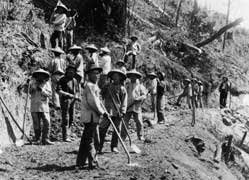 |
| Chinese rail workers |
Very cool site
from the National Archives and Records Administration:
|
|
|
| Four died and many others were injured in the Wheatland Hop Riot when police fired into a crowd of California hop pickers trying to organize (with the help of the IWW, or Industrial Workers of the World). At the Durst Ranch in Wheatland, the state's largest single agricultural employer, hundreds of workers—whites, Mexicans, and Filipinos—had put down their tools because of terrible working conditions, low wages, and an almost complete lack of sanitation and decent housing. It was one of the first attempts to organize agricultural workers. |
| The story of the Wheatland Hop Riot |
|
|
|
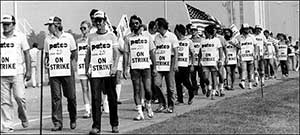
Nearly 13,000 of the nation’s 17,500 air traffic controllers, members of the Professional Air Traffic Controllers Organization (PATCO), went on strike.
|
After six months of negotiations with PATCO President Robert Poli, the Federal Aviation Administration (FAA) had offered less than 10% of what the union had sought. Due to the stressful nature of their jobs, managing the nation’s ever-increasing volume of airport landings and take-offs without up-to-date equipment, they had asked for a shorter workweek, an increase in pay and retirement after 20 years. 95% of PATCO members rejected the FAA’s final offer.
The union had endorsed Ronald Reagan for president in 1980 (one of very few to do so), but President Reagan said they were violating U.S. law banning strikes by federal workers, and would all be terminated unless they returned to work within 48 hours. |
| A Reagan Letter to Robert Poli,
PATCO (October. 20, 1980) |
| |
Dear
Mr. Poli:
I have been briefed by members of my staff as to the
deplorable state of our nation's air traffic control system. They have
told me that too few people working unreasonable hours with obsolete equipment
has placed the nation's air travellers in unwarranted danger. In an area
so clearly related to public safety the Carter administration has failed to act
responsibly.
You can rest assured that if I am elected President,
I will take whatever steps are necessary to provide our air traffic controllers
with the most modern equipment available and to adjust staff levels and work
days so that they are commensurate with achieving a maximum degree of public
safety....
I pledge to you that my administration will work very
closely with you to bring about a spirit of cooperation between the President
and the air traffic controllers.
Sincerely,
Ronald Reagan |
| More
about the strike |
|
|
Laurie McBride and seven other Motherpeace members of the Nanoose Conversion Campaign were arrested for picnicking on Winchelsea Island, east of British Columbia’s Vancouver Island. They, along with dozens of volunteer witnesses and supporters who had set off by boat from the town of Nanoose Bay, were protesting the ten-year extension of free use by the U.S. of the Canadian Forces Maritime Experimental Test Range (CFMETR). It is a joint Canadian-American facility for torpedos, other maritime warfare and detection equipment; the island held the command and control center. The Campaign advocated conversion of the area back to peaceful purposes. |
| Laurie
McBride’s story |
|
|
One hundred forty-three white English and Afrikaans conscripts from four cities in South Africa announced their refusal to serve in the South African Defense Force. The SADF was engaged in actions to preserve apartheid, the social and economic system of racial separatism, in South Africa, and to occupy and thwart independence for South Africa’s neighbors, Angola and Namibia
[see
July 31, 1986].
|
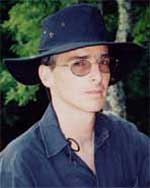 |
24-year-old David Bruce had just been sentenced to six years in prison for refusing to serve; he was released after two. He works today with The Centre for the Study of Violence and Reconciliation on issues of integrity, conduct and accountability in democratic policing.
|
| |
David
Bruce |
The Police That We Want.pdf |
|
The Pentagon reported a second attack on U.S. Navy ships in Vietnam’s Gulf of Tonkin [see August 2, 1964]. But there was no such activity reported at the time by the task force commander in the Gulf, Captain John J. Herrick.
One of the Navy pilots flying overhead that night was squadron commander James Stockdale, who was later captured and held as a POW by the North Vietnamese for more than seven years, and became Ross Perot's vice-presidential candidate in 1992:
"
I had the best seat in the house to watch that event and our
destroyers were just shooting at phantom targets — there
were no PT boats there . . . There was nothing there but black
water and American firepower."
Nearly three decades later during the Gulf War, Pulitzer Prize-winning
columnist Sydney Schanberg warned journalists not to forget "our
unquestioning chorus of agreeability when Lyndon Johnson bamboozled
us with his fabrication of the Gulf of Tonkin incident." |
|
| FBI agents discovered the bodies of three missing civil rights workers buried deep in an earthen dam near Philadelphia, Mississippi. James Chaney was a local African-American man who had joined the Congress of Racial Equality (CORE). Andrew Goodman and Michael Schwerner had traveled from New York to heavily segregated Mississippi that year to help register voters with the support of CORE. |
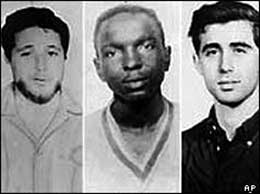 Schwerner,
Chaney and Goodman Schwerner,
Chaney and Goodman
|
At the time, fewer than 10% of eligible black Mississippians were registered to vote.
The three young men and many others were part of Freedom Summer, a massive voter registration and education project organized by the Council of Federated organizations (COFO), an umbrella group of major civil rights organizations.
|
| Watch a video |
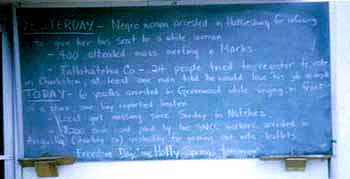
This is a close-up of the chalk-board beside the front door
of the COFO headquarters building in Jackson, Mississippi.
Here is a transcription of what was written on the chalkboard
this August day in 1964:
Yesterday - Negro woman arrested in Hattiesburg for refusing
to give her bus seat to a white woman.
• 400 attended mass meeting in Marks.
• Tallahatchie Co. - 24 people tried to register to vote in Charleston;
at least one man told he would lose his job as a result.
Today - 6 youths arrested in Greenwood while singing in front of a store. One
boy reported beaten.
• Local girl missing since Sunday in Natchez
• $200 each bond paid by 2 SNCC workers arrested in Anguilla (Sharkey Co.)
yesterday for passing out vote leaflets. |
 |
| Read
more |
|
|
Peace Ribbons made by thousands of women were wrapped around the U.S. Pentagon, the White House and the Capitol. Twenty thousand people participated, and the 27,000 panels making up the ribbon stretched for 15 miles.
|
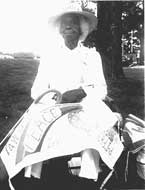 |
Maggie Wade, who traveled to Washington, DC from Indiana with her daughter,
sitting at the Pentagon with her embroidery panel of the Ribbon Project.
Photo © Ellen Shub |
|
The U.S., U.S.S.R. and U.K. signed the Limited Test Ban Treaty in Moscow, banning nuclear testing in the atmosphere, in space or underwater. Underground testing, however, was not prohibited. It has since been signed by more than 100 countries.
|
 |
Text
of the treaty, background and signatories
|
|
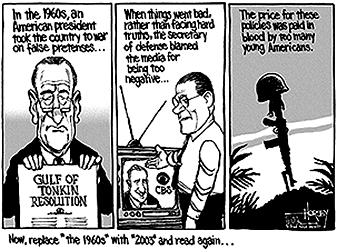
President Lyndon Johnson asked Congress ”for a resolution expressing the unity and determination of the United States in supporting freedom and in protecting peace in southeast Asia.” The president had already used the alleged incidents in the Gulf of Tonkin [see August 4, 1964 above] to mount major air strikes on the North Vietnamese navy. The resulting Congressional Resolution authorizing military force in Vietnam was the legal basis for the war there that lasted until 1975.
Only two members of the senate voted against the resolution: Ernest Greuning of Alaska and Wayne Morse of Oregon.
|
"Let's
go back to the war in Vietnam. I was here. I was one of the
Senators who voted for the Gulf of Tonkin resolution. Yes,
I voted for the Gulf of Tonkin resolution. I am sorry for
that. I am guilty of doing that. I should have been one of
the two, or at least I should have made it three, Senators
who voted against that Gulf of Tonkin resolution. But I am
not wanting to commit that sin twice, and that is exactly
what we are doing here.
This is another Gulf of Tonkin resolution.”
Senator Robert Byrd (D-WV) in debate on the resolution to
authorize use of military force on Iraq,
October 4, 2002
|
 |
|
| President Ronald Reagan, having ordered striking air traffic controllers back to work within 48 hours, fired 11,359 (more than 70%) who ignored the order, and permanently banned them from federal service (a ban later lifted by President Bill Clinton). The controllers, seeking a shorter workweek among other things, were concerned the long hours they were required to work performing their high-stress jobs were a danger to both their health and the public safety. |
Lessons from When Reagan Crushed PATCO Union |
|
| At Auburn Prison in New York state, William Kemmler became the first person to be executed in the electric chair, developed by the Medico-Legal Society and Harold Brown, a colleague of Thomas Edison. |
| William Kemmler received two applications of 1,300 volts of alternating current. The first lasted for only 17 seconds because a leather belt was about to fall off one of the second-hand Westinghouse generators. Kemmler was still alive. The second jolt lasted until the smell of burning flesh filled the room, about four minutes. |
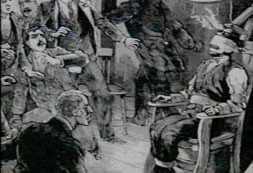 |
| As soon as his charred body stopped smoldering, Kemmler was pronounced dead. |
|
August
6th, 1945 - 8:15 AM
|
The
United States dropped the first atomic bomb
used in warfare
on Hiroshima, Japan. |
|
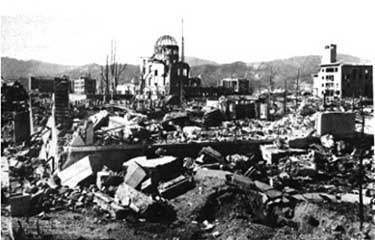
Hiroshima
ruins |
An estimated 140,000 died from the immediate effects of this bomb and tens of thousands more died in subsequent years from burns and other injuries, and radiation-related illnesses. President Harry Truman ordered the use of the weapon in hopes of avoiding an invasion of Japan to end the war, and the presumed casualties likely to be suffered by invading American troops.
|
| The weapon, “Little Boy,” was delivered by a B-29 Superfortress nicknamed the Enola Gay, based on the island of Tinian, and piloted by Colonel Paul W. Tibbets. |
| Voices
of the Hibakusha, those injured in the bombings |
 |
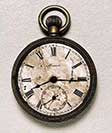
<Hiroshima
survivor
Found
watch stopped at the time of explosion>
|
|
|
Documents related
to the decision to drop the atomic bomb
|
On
August 6, 1995 up to 50,000 people attended a memorial
service commemorating Hiroshima Peace Day on the 50th
anniversary of the first atomic bombing. |
|
|
Eleven activists from the Committee for Nonviolent Action (CNVA) were arrested attempting to enter the atomic testing grounds at Camp Mercury, Nevada, the first of what eventually became many thousands of arrests at the Nevada test site.
|
|
The Voting Rights Act of 1965 was signed by President Johnson, making illegal century-old practices aimed at preventing African Americans from exercising their constitutional right to vote. |
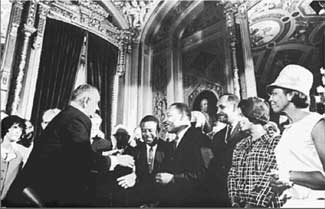 |
It created federal oversight of election laws in six Southern states (Alabama, Georgia, Louisiana, Mississippi, South Carolina, and Virginia) and in many counties of North Carolina where black voter turnout was very low. Black voter registration rates were as low as 7% in Mississippi prior to passage of the law; today voter registration rates are comparable for both blacks and whites in these states.
|
| The laws has been re-authorized by Congress four times. |
| Introduction to the Voting Rights Act: |
|
|
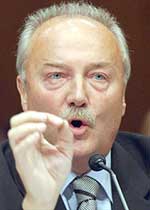
George
Galloway
|
The U.S. imposed trade sanctions on Iraq. As a result, the lack of much-needed medicines, water purification equipment and other items led to the death of many innocent Iraqis. According to British Member of Parliament George Galloway in his testimony to a committee of the U.S. Congress on May 17, 2005, these sanctions “ . . . killed one million
Iraqis, most of them children, most of them died before
they even knew that they were Iraqis, but they died for
no other reason other than that they were Iraqis with the
misfortune to be born at that time . . . .” |
| When asked on U.S. television if she thought that the death of half a million Iraqi children (due to sanctions on Iraq) was a price worth paying, then U.S. Secretary of State Madeline Albright replied: "This is a very hard choice, but we think the price is worth it." -60 Minutes (5/12/96) |
| Were Sanctions Worth the Price? by Christopher Hayes |
|
Nearly 50,000 people attended a memorial service commemorating Hiroshima Peace Day on the 50th anniversary of the first atomic bombing which killed nearly 200,000 Japanese with a single weapon. |
| The headlines when it happened |
|
|
Calling
themselves the Minuteman III Plowshares, two peace activists,
Daniel Sicken [pronounced seekin], 56,
of Brattleboro, Vermont
and Sachio Ko-Yin, 25, of Ridgewood, N.J
entered silo N7 in Weld County [near Greeley] in Colorado
operated by Warren AFB, Cheyenne, Wyoming. With hammers
and their own blood, they symbolically disarmed structures
on the launching pad of a Minuteman III nuclear missile
silo.
|
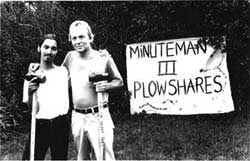 Sachio
Ko-Yin and Daniel Sicken Sachio
Ko-Yin and Daniel Sicken
|
| Read about the Minuteman
III Plowshares action |
|
| Ralph Bunche, born this day in Detroit, spent a remarkable life in vigorous service to academia, his community, the nation and the world. |
|
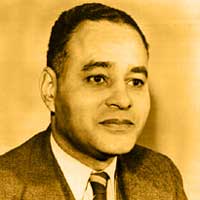
Ralph
Bunche
|
Head of the Howard University Political Science Department for over twenty years, he was one of the first African Americans to hold a key position at the U.S. State Department. He went on to the United Nations and served as its mediator on Palestine. He was the recipient of the Nobel Peace Prize for negotiating the 1948 armistice agreements between Israel and the Arab states. He worked with Martin Luther King in the civil rights struggles of the ‘50s and ’60s. |
| Succinct
biography of Ralph Bunche: |
|
The D.C. Court of Appeals reversed playwright Arthur Miller's conviction for contempt of Congress following a two-year legal battle. He had been charged for refusing to tell the House Un-American Activities Committee (HUAC) the names of alleged Communist writers with whom he attended five or six meetings in New York in 1947. |
 |
| Arthur
Miller in front of HUAC |
| Read
more |
|
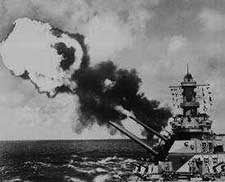
| After a reported U.S. confrontation with North Vietnamese forces that, it was later discovered, never occurred, the U.S. Congress nearly unanimously passed the Gulf of Tonkin resolution. |
|
The resolution gave President Lyndon Johnson broad powers in dealing with North Vietnam, including sending U.S. troops.
News coverage relied almost entirely on official U.S. government sources so Americans assumed the North had in fact launched an unprovoked attack. Two courageous senators, Wayne Morse (D-Oregon) and Ernest Gruening (D-Alaska), provided the only "no" votes.
|
|
|
Four experienced Plowshares activists, Michele Naar-Obed, Erin Sieber and Rick Sieber, hammered and poured their blood on the U.S.S. Greenville, a fast-attack submarine in production at the Newport News, Virginia, shipyard. |
|
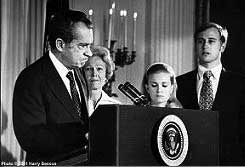 |
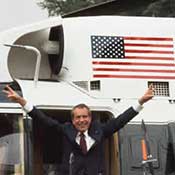
President Richard M. Nixon resigned from office, the first U.S. president ever to do so. The House Judiciary Committee had, with bipartisan support (the Democrats and one-third of the Republican members), voted for three articles of impeachment: obstruction of justice, abuse of power, and contempt of Congress.
|
|
A week later, one of the White House tapes was finally made public, showing the President’s direct involvement in the Watergate scandal cover-up:"...call
the FBI and say that we wish, for the country, don't
go any further into this case, period..." -
Nixon to Chief of Staff Haldeman, June 23, 1972 (six
days after
the Watergate break-in)
|
|
He officially left office August 9, and was fully pardoned
one month later by his successor, President Gerald Ford.
Asked years later about some of his administration’s
questionable activities, Nixon said, "Well,
when the president does that, it isn't illegal." |
| The headlines in Washington that day |
|
A 53-mile peace walk commemorating the bombing of Hiroshima and Nagasaki ended near Clam Lake, Wisconsin, at the site of the U.S. Navy’s Project Elf (extremely low frequency) submarine communications transmitter. Twelve of the demonstrators were arrested for trespassing, adding to the nearly 500 previously arrested for sit-ins, Citizen Inspections, blockades and disarmament actions at the transmitter site in Ashland County. |
|
|

|
Franz Jägerstätter, an Austrian conscientious objector who reported for induction but refused to serve in the army of the Third Reich, was executed by guillotine at
Brandenburg-Gorden prison. An American, Gordon Zahn, wrote about Jägerstätter while researching the subject of German Roman Catholics' response to Hitler.
Zahn’s book, In Solitary Witness, influenced Daniel Ellsberg's decision to stand against the Vietnam War by bringing the previously secret Pentagon Papers to public attention.
|
Against the Stream by Erna Putz, the story of the courage of Franz Jägerstätter |
|
The second atomic bomb, “Fatman,” was dropped on the arms-manufacturing and key port city of Nagasaki. The plan to drop a second bomb was to test a different design rather than one of military necessity. The Hiroshima weapon was a gun type, the Nagasaki weapon an implosion type, and the War Department wanted to know which was the more effective design.Responsibility for the timing of the second bombing had been delegated by President Harry Truman before the Hiroshima attack to Colonel Paul W. Tibbets, the commander of the 509th Composite Group on Tinian, one of the Northern Mariana Islands in the western Pacific.
|

|
| Scheduled for August 11 against Kokura, the raid was moved forward to avoid a five-day period of bad weather forecast to begin on August 10. English translation of leaflet air-dropped over Japan after the first bomb [excerpt]: “We are in possession of the most destructive explosive ever devised by man. A single one of our newly developed atomic bombs is actually the equivalent in explosive power to what 2000 of our giant B-29s can carry on a single mission. This awful fact is one for you to ponder and we solemnly assure you it is grimly accurate.” |
| Of the 195,00 population of the city (many of its children had been evacuated due to bombing in the days just prior), 39,000 died and 25,000 were injured, and 40% of all residences were damaged or destroyed. |
"What
on earth has happened?" said my mother, holding
her baby tightly in her arms. "Is it the end of
the world?"
Sachiko Yamaguchi (nine years
old at the time of the bombing). |
|
|
|
20,000 women demonstrated against the pass laws in Pretoria, South Africa. Pass laws required that Africans carry identity documents with them at all times. These books had to contain stamps providing official proof the person in question had permission to be in a particular town at a given time. Initially, only men were forced to carry these books, but soon the law also compelled women to carry the documents.
|
|
|
Two hundred people sat in at the New York City offices of Dow Chemical Company to protest the widespread use in Vietnam of Dow’s flammable defoliant Napalm. |
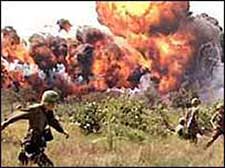 |
| Napalm
in use in Vietnam |
Read
more about Dow Chemical and the use of napalm |
|
|
Hundreds were arrested in an all-day blockade of the Rocky Flats nuclear weapons plant in Golden, Colorado. Protests at Rocky Flats had been going on for some years. |
|
Adrian “Cap” Anson refused to field his visiting Chicago White Stockings team in an exhibition baseball game if the Toledo Mud Hens included star catcher Moses Fleetwood Walker in their lineup. Chicago’s Captain Anson, who grew up in slaveholding Iowa, said he wouldn’t share the diamond with a non-white player. After more than an hour’s delay, Charlie Morton, the Toledo manager, insisted that if Chicago forfeited the game, it would also lose its share of the gate receipts; Anson relented.
|
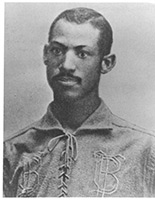 Moses Fleetwood Walker Moses Fleetwood Walker |
Morton had not planned to have Walker catch due to injury, but insisted on putting him in at centerfield, despite Cap Anson’s objections.
| |
|
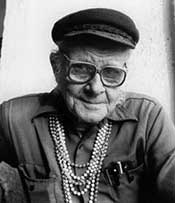
Gay rights activist Harry Hay organized what later became the Mattachine Society (originally ~ Foundation), a groundbreaking 1950s gay rights organization. The group was named after the Mattachines, a medieval troupe of men who went village-to-village advocating social justice.
|
| Mattachine: Radical Roots of Gay Liberation |
|
Two Plowshares activists, Barb Katt and John LaForge, damaged a guidance system for a Trident submarine with hammers at a Sperry plant in Minnesota. In sentencing them to six months’ probation, U.S. District Judge Miles W. Lord commented, "Why
do we condemn and hang individual killers, while extolling
the
virtues of warmongers?" |
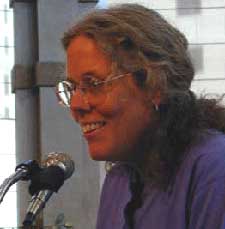 |
| Barb
Katt |
More on the Sperry Software Pair More plowshares actions |
|
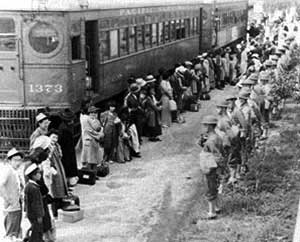
President George H.W. Bush signed legislation apologizing and compensating for the World War II internment of Japanese Americans.
President Franklin Roosevelt had authorized the round-up of hundreds of thousands of Americans of Japanese ancestry, some of whom were American citizens, as security risks. Most lost all their property and were moved to relocation camps for the duration of the war (though not in Hawaii, then not yet a state, where public opposition would not allow it). |
 |
|
Ruth Bader Ginsburg is sworn in as the second woman and 107th Justice to serve on the U.S. Supreme Court.
|
|
|
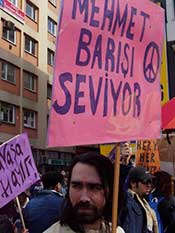
Mehmet Tarhan was sentenced to four years’ imprisonment on two charges of “insubordination before command” and “insubordination before command for trying to escape from military service” because he refused to serve in the Turkish Army.
He would not sign any paper, put on a uniform, nor allow his hair and beard to be cut. He went on two extended hunger strikes to protest his arrest and abuse while in Sivas Military Prison. War Resisters International has supported his efforts throughout his ordeal. He was released unexpectedly from prison after one year.
|
 |
| Read
more |
|
| Federal troops forced some 1,200 jobless workers across the Potomac River and out of Washington, D.C. |
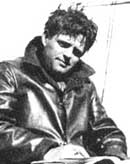
Jack
London |
Led by an unemployed activist, “General” Charles "Hobo" Kelly, the jobless group's "soldiers" included young journalist Jack London, known for writing about social issues, and miner/cowboy William ”Big Bill” Haywood who later organized western miners and the Industrial Workers of the World (IWW). |
 "Big
Bill" Haywood "Big
Bill" Haywood |
| Read
about “Big Bill” |
|
| A drugstore chain in Wichita, Kansas, agreed to serve all its customers after weeks of sit-ins at Dockum’s lunch counter by local African-Americans who wanted an end to segregation. On this day, as several black Wichitans were sitting at the counter even though the store refused to serve them, a white man around 40 walked in and looked at them for several minutes. Then he looked at the store manager and said, simply, “Serve them. I'm losing too much money.” He was the owner, Robert Dockum. |
| That day the lawyer for the local NAACP branch called the company and was told by the a vice president ”he had instructed all of his managers, clerks, etc., to serve all people without regard to race, creed or color,” statewide. This was the first success of the sit-in movement which soon spread to Oklahoma City and other towns in Kansas, but is often thought to have started in Greensboro, North Carolina, in 1960. |
|
|
|
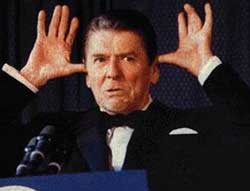
Prior to his weekly radio address, unaware that the microphone was open and he was broadcasting, President Ronald Reagan joked, “My fellow Americans, I'm pleased to tell you today that I've signed legislation that will outlaw Russia forever. We begin bombing in five minutes.” Many Americans and others throughout the world were concerned about the President’s apparently flippant attitude towards nuclear war at a time of increasing tension between the two major nuclear powers.
|
Among other things, the U.S. had begun a major strategic arms buildup, adding many thousands of additional nuclear warheads along with a broad range of new delivery systems: long-range bombers including 100 B-1B stealth bombers and MX (10-warhead) ICBMs, considered first-strike weapons; intermediate-range missiles to be deployed in Europe; 3000 cruise missiles; and Trident nuclear submarines with sea-launched cruise missiles.
Additionally, Reagan had proposed building the space-based Strategic Defense Initiative of anti-ballistic missiles, a destabilizing influence on the nuclear balance. |
| The
Nuclear Arms Control Legacy of Ronald Reagan |
|
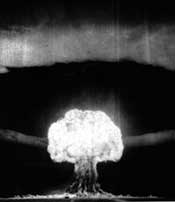
The first Soviet hydrogen (thermonuclear or fusion) bomb, far more potentially damaging than those dropped on Japan, was exploded in the Kazakh desert, then part of the Soviet Union. Igor Vasziljevics Kurcsatov, head of the Soviet Uranium Committee, said to Josef Stalin at the time: “The atomic sword is in our hand. It is time to think about the peaceful use of nuclear energy.”
|
 |
| The
Soviet Nuclear Weapons Program |
|
|
|
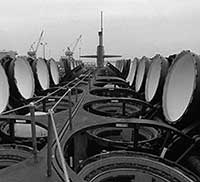
Twelve were arrested in an attempted blockade of the first Trident submarine, the USS Ohio, entering the Hood Canal in the state of Washington. In motorboats, sailboats and small handmade wooden vessels, the demonstrators were objecting to the presence of nuclear weapons in Seattle. The Coast Guard overturned some of the vessels with water cannon. |
| open
missile tubes on Trident sub |
|
|

|
Thousands demonstrated in Philadelphia and other cities in support of journalist and former Black Panther Mumia Abu-Jamal (on death row for murder since 1982) in the largest anti-death-penalty demonstrations in the U.S. to date. |
Who
is Mumia Abu-Jamal?
|
|
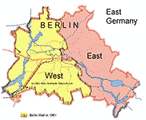
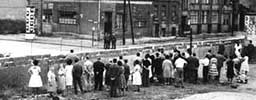
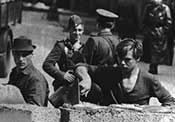
| The city of Berlin was divided as East Germany sealed off the border between the city's eastern (Soviet Union-controlled) and western (American-, British- and French-controlled) sectors in order to halt the flight of economic and political refugees to the West. Two days later, work began on the Berlin Wall. |
 |
|
|
The Wall, 155 km (96 miles) of barbed wire and concrete, completely surrounded West Berlin and had to be rebuilt three times.
|
 |
| The Berlin Wall Online |
|
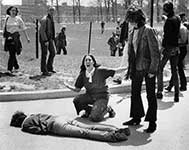 |
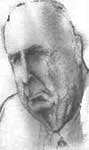
U.S. Attorney General John Mitchell announced there would be no federal grand jury investigation into the May 4, 1970, shootings at Kent State University. Ohio National Guard troops had fired on unarmed anti-Vietnam-War demonstrators, killing four and wounding nine.
|
 |
| slain
Kent State student |
Atty
General John Mitchell |
Defenders of the National Guard said they were responding to a shot from the crowd though that was never verified. But in 2007 a tape was released through a freedom-of-information request to the FBI revealing a Guard officer issuing the command, “Right here! Get Set! Point! Fire!”
Kent State’s protest was part of massive spontaneous national outrage over Pres. Richard Nixon’s expansion of the war through his invading non-combatant Cambodia. Vice President Spiro Agnew had referred to the campus protesters as Nazi “brownshirts.” |
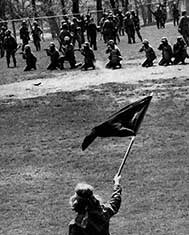 |
Ohio National Guard troops
firing on anti-war demonstrators at
Kent State University |
| The day before, Ohio Govenor James Rhodes had referred to the student demonstrators as “the strongest, well-trained militant revolutionary group that has ever assembled in America. They're worse than the brownshirts and the Communist element and the night riders and the vigilantes. They are the worst type of people that we harbor in America.” |
|
| President George H.W. Bush announced strong United States support for the draft Chemical Weapons Convention completed at the Conference on Disarmament in Geneva. The president stated that the U.S. was committed to the treaty, and called on all other nations to support the treaty and to pledge adherence to it. |
| Read more |
Chemical
weapons treaty update (2001) |
|
|
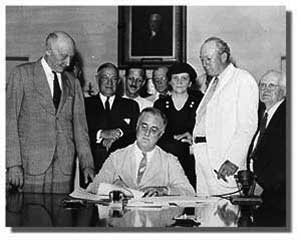
President Franklin D. Roosevelt signed the Social Security Act into law, creating unemployment compensation, old-age benefits and aid to dependent children. |
"We
can never insure one hundred percent of the population
against one hundred percent
of the hazards and vicissitudes of life, but we have tried
to frame a law which will give some measure of protection
to the average citizen and to his family against the loss
of a job and against poverty-ridden old age.”
President Roosevelt at the signing
President
Roosevelt signing Social Security Act of 1935 in the
Cabinet Room of the White House.
Library
of Congress photo |
|
A
comprehensive history: |
|
In the German Nazi concentration camp at Auschwitz, a group of prisoners had been chosen by the camp’s commander for death by starvation. Roman Catholic Fr. Maximilian Maria Kolbe offered himself for death instead of one of the condemned because the man had a family he needed to be alive to support. Fr. Kolbe was put to death on this day by lethal injection following two weeks of starvation.
Pope John Paul II declared him a Saint in 1982. |
|
| President Harry Truman announced that Japan, one week following the atomic bomb attacks on the cities of Hiroshima and Nagasaki, had surrendered unconditionally, ending World War II. |
|
The U.S.-launched Explorer VI satellite recorded the first photograph of Earth taken from space, at an altitude of 17,000 miles (27,400 km). |
 |
| Read
more |
|
|
Twenty people were arrested for trying to attend services at the white First Baptist Church in Grenada, Mississippi. They were charged with “disturbing divine worship.” Southern Christian Leadership Conference (SCLC) field staff member Jim Bulloch was arrested and his car fire-bombed while he was in jail. |
|
|
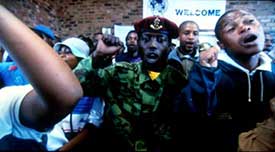
400 anti-apartheid students occupied the university in Cape Town, South Africa, to protest its refusal to hire a black professor.
|
 |
|
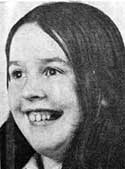
| Majella O'Hare, a young Catholic girl, was shot dead by British soldiers while walking with other children to confession near her home in Ballymoyer, Whitecross, County Armagh. |
|
The soldiers, initially denying they had fired any weapons, claimed that the patrol had been fired upon by an unidentified gunman. But there were serious doubts about the army’s claim. Eyewitness reports failed to confirm it and, unofficially, police investigating the case referred to the army’s “phantom gunman.”
The same day 10,000 Northern Irish gathered at a demonstration in Andersontown, organized by the Women's Peace Movement (later known as Peace People).
|
 Majella
O'Hare Majella
O'Hare |
| How
it happened from people who were there |
|
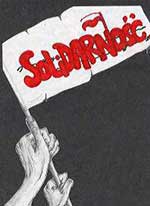 |
After
months of labor turmoil, more than 16,000 Polish workers
seized control of the Lenin Shipyards in Gdansk. They helped
form Solidarnos´c´ (Solidarity), the first
independent labor union anywhere in the Soviet bloc, as
the Warsaw Pact nations were known. Under the leadership
of Lech Valensa [lek va wen´suh] and others, it helped
unite the broad political, social and religious opposition
to the Communist government. |
| Long-range look at Solidarity |
|
Congress passed a law to remove the Lakota Sioux and their allies from the Black Hills country of South Dakota after gold was found there. Often referred to as the “starve or sell” bill, it provided that no further appropriations would be made for 1868 Treaty-guaranteed rations for the Sioux unless they gave up their sacred Black Hills, or Paha Sapa. That treaty had granted them the territory and hunting rights in exchange for peace.
|
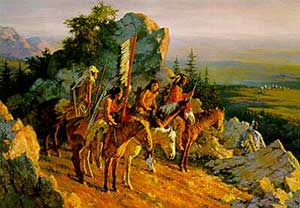 Lakota
Sioux watch as their Black Hills are invaded. painting
by Howard Terpning Lakota
Sioux watch as their Black Hills are invaded. painting
by Howard Terpning |
| The
larger story of the Sioux and the U.S. |
|
|
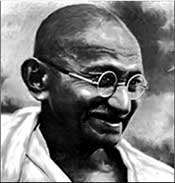
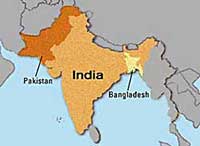
Great Britain partitioned its empire on the Asian subcontinent into primarily Hindu, but nominally secular, India, and predominantly Muslim Pakistan (including the non-contiguous state of East Bengal, now the nation of Bangladesh). The two nations became independent of British rule after 200 years of colonial control, and more than two decades of Gandhi-led resistance. Rioting between Hindus, Sikhs and Muslims followed, especially over the state of Kashmir, majority Muslim but newly part of India. |
Mahatma Gandhi had been an advocate for a united India where Hindus and Muslims would live together in peace. A few months later, at the age of 78, he began a fast with the purpose of stopping the sectarian bloodshed, in which hundreds of thousands died, and many more displaced. After five days the opposing leaders pledged to stop the fighting and Gandhi broke his fast.
|
|
Twelve days later he was assassinated by a Hindu opposed to his program of tolerance for all ethnicities, castes and religions. |
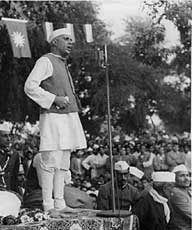 |
One of the principal leaders of the independence movement, Jawaharlal Nehru, who became India’s first prime minister, spoke to the Constituent Assembly of India in New Delhi: "Long years ago we made a tryst with destiny, and now the time comes when we shall redeem our pledge, not wholly or in full measure, but very substantially. At the stroke of the midnight hour, when the world sleeps, India will awake to life and freedom. A moment comes, which comes but rarely in history, when we step out from the old to the new, when an age ends, and when the soul of a nation, long suppressed, finds utterance. |
It is fitting that at this solemn moment we take the pledge of dedication to the service of India and her people and to the still larger cause of humanity." |
among
the tributes to Gandhi upon his death were these words
by Albert Einstein:
“Generations
to come will scarce believe that such a one as
this walked
the
earth in flesh and blood.” |
| Listen to a portion of Nehru’s speech and a bit of old film |
More
on partition and independence |
|
|
|
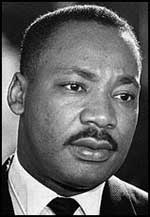
The
Reverend Martin Luther King, Jr., speaking at a Southern
Christian Leadership
Conference in Atlanta, urged a massive civil disobedience
drive in northern cities. Responding to the widespread
rioting there, he said, “It
is purposeless to tell Negroes they should not be enraged
when they should
be
. . . Civil disobedience can utilize the militance wasted
in riots . . . .” |
|
Mohammad Reza Pahlavi, the constitutional monarch of Iran, dismissed the elected prime minister, Dr. Mohammad Mosaddeq, without the approval of the parliament. In appointing Gen. Fazlollah Zahedi in his place, the Shah was following the coup plan, code-named TPAJAX, developed by the CIA under the direction of Kermit Roosevelt
(grandson of President Theodore), and Great Britain’s intelligence service, MI6. |
About Mohammad Mosaddeq |
The
real story according to CIA records |
|
|
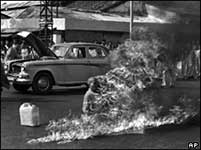
Buddhists staged protests across South Vietnam against the government of President Ngo Dinh Diem, a Catholic who removed Buddhists from important government positions and replaced them with Catholics. Buddhist monks protested Diem’s intolerance of other religions and the methods he used to silence them. Several Buddhist monks immolated themselves in protest of the war being waged against insurgents in the south, and against North Vietnam.
|
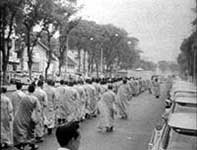 |
The Buddist monk Quang Duc became the first to kill himself in an anti-government protest in Vietnam in June, 1963
20,000 Buddhists in silent march for peace, Hue, South Vietnam. 1966 |
 |
|
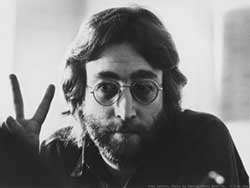
Beatle John Lennon, while in Toronto, Ontario, Canada, expressed his admiration for American draft dodgers who resisted enlistment in the U.S. armed forces because of the Vietnam War.
|
|
| An interview with the Beatles 8/17/1966 |
|
|
 Enten
Eller Enten
Eller
|
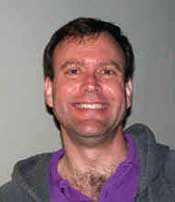
The first draft resister since the Vietnam era, Enten Eller, was convicted. A member of the Mennonite Church of the Brethren Resistance, he received three years’ probation in Bridgewater, Virginia, for refusing to register for the draft. Support demonstrations occurred all over the U.S.
|
| The history of Mennonite
resistance to conscription |
|
| In another step in the ethnic intimidation that led ultimately to the Armenian genocide in Turkey, looting was reported in Sivas, Diyarbekir, and other provinces. Under the guise of collecting war contributions (WWI had just begun), stores owned by Armenian and Greek merchants were vandalized. 1,080 shops and stalls owned by Armenians were burned at the Diyarbekir bazaar. |
| Chronology
of the Armenian Genocide |
|
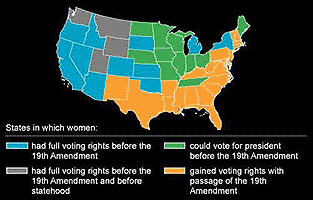
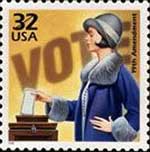
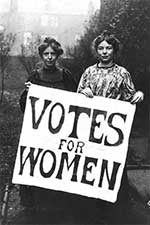
Women throughout the U.S. won the right to vote when the Tennessee legislature approved the 19th amendment to the U.S. Constitution (the last of 36 states then required to approve it). An amendment for universal suffrage was first introduced in Congress in 1878, and Wyoming had granted suffrage in state law by 1890.
|
|
| This amendment to enfranchise all American women had been introduced annually for 41 years without passage; it had gotten two-thirds of both houses of Congress to approve it just the year before. |
| “The right of citizens of the United States to vote shall not be denied or abridged by the United States or by any State on account of sex.” |
| In
the Tennessee House, 24-year-old Representative Harry Burn surprised
observers by casting the deciding
vote for ratification. At the time of his vote, Burns
had in his pocket a letter he had received from his mother
urging him, "Don't forget to be a good boy" and "vote
for suffrage." |
 |
Teaching With Documents: Woman Suffrage and the 19th Amendment (National Archives) |
|

James
Meredith
|
James Meredith, the first African American to attend the University of Mississippi, became the first to graduate. His enrollment at “Ole Miss” a year earlier had been met with deadly riots, forcing him to attend class escorted by heavily armed guards. |
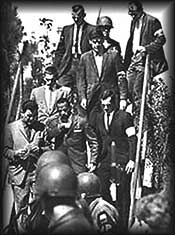 |
James
Meredith being escorted to his classes by
U.S. marshals and the military. |
Who
was James Meredith |
|
|
South Africa was banned from taking part in the 18th Olympic Games in Tokyo due to the country's refusal to reform its racially separatist apartheid system. |
Read
more |
|
Steve Biko, the leader of the Black Consciousness Movement resisting apartheid, was arrested at a roadblock outside King William’s Town. He died while in custody from abuse during the weeks of interrogation that followed.
|
|

Steve
Biko
|
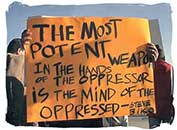
"So
as a prelude whites must be made to realise that they
are only human, not superior. Same with Blacks. They
must be made to realise that they are also human, not
inferior.""The
most potent weapon in the hands of the oppressor is the mind
of the
oppressed." - Biko speech
in Cape Town, 1971 |
More
about Biko |
 |
|
|
|
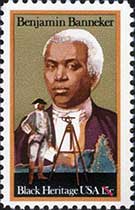
Benjamin Banneker, the first recognized African-American scientist, a son of former slaves, sent a copy of his just-published Almanac to Secretary of State Thomas Jefferson, along with an appeal about “the injustice of a
state of slavery.” |
More about Benjamin Banneker, his achievements and his letter to the president
|
| Benjamin
Banneker |
|
|
|
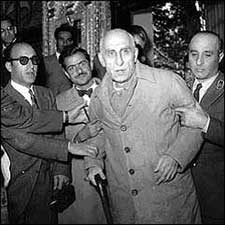
Royalist troops surrounded, bombarded and burned the residence of the Mohammed Mosaddeq, the recently dismissed elected Iranian Prime Minister. After having briefly fled his country for Italy due to the rioting over his unconstitutional dismissal of Mosaddeq, Shah Mohammed Reza Pahlavi was returned to the Peacock throne with dictatorial power. All this was done with the planning, financing and assistance of the CIA and its British counterpart, MI6.
|
Prime
Minister Dr. Mohammed Mosaddeq |
Background
on Mosaddeq |
Stephen Kinzer on the U.S.-Iran relationship in perspective
|
|
|
|
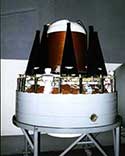
| The
U.S. deployed Minuteman III intercontinental ballistic
missiles near Greeley, Colorado. It was the first missile
with multiple (then three-170 kiloton) nuclear warheads
known as MIRVs (Multiple Independently targetable Re-entry
Vehicles).
|
|
| All the details about this fearsome armament |
| The MIRV: each cone is a warhead |
|
|
|
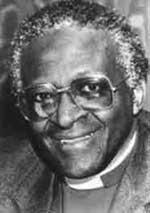
Anglican Bishop and Nobel Peace Prize-winner Desmond Tutu was among hundreds of black demonstrators, members of Mass Democratic Movement who were whipped and blasted with sand stirred up by helicopters as they attempted to picnic on a “whites-only” beach near Cape Town, South Africa. |
| Desmond Mpilo Tutu |
|
| The first enslaved Africans brought to North America arrived in Jamestown, Virginia, aboard a Dutch ship. |
|
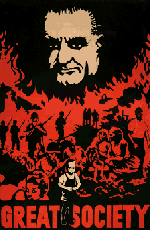
A nearly $1 billion (about $5 billion in current dollars) anti-poverty measure, the Economic Opportunity Act, which created Head Start, VISTA (Volunteers In Service To America), and other programs that became part of the “War on Poverty,” was signed into law by President Lyndon Johnson. |
|

Sargent Shriver & LBJ |
Sargent Shriver, the first director of the Peace Corps, drafted the legislation and became director of the Office of Equal Opportunity which implemented the new law. |
The "Great Society" |
|
|
Nat Turner, a 30-year-old man legally owned by a
child, and six other slaves began a violent insurrection
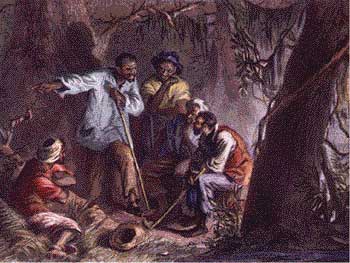
in Southampton County, Virginia.They began by killing the child’s stepfather, Joseph Travis, and his family. Within the next 24 hours, Turner and, ultimately, about 40 followers killed the families who owned adjacent slaveholding properties, nearly 60 whites, while freeing and inciting other slaves to join them. |
Militia and federal troops were called out, and the uprising was suppressed with 55 African Americans including Turner executed by hanging in Jerusalem, Virginia, and hundreds more killed by white mobs and vigilantes in revenge. |
More
about Nat Turner |
Nat
Turner's
confession |
|
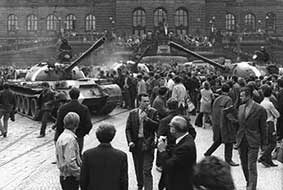
| The
Czechoslovakian people spontaneously and nonviolently resisted
invasion of their country of 14 million by hundreds of
thousands of troops and 5000+ tanks from the Soviet Union
and four other Warsaw Pact countries. |
| The
troops were enforcing the overthrow and arrest of Alexander
Dubcek and his government. They had been implementing
significant democratic reforms known collectively as “socialism
with a human face,” or the Prague Spring. |
|
 |
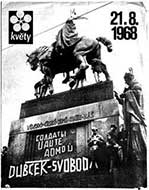
Cover
of the magazine Kvety, with a photograph of the statue
of St. Wenceslas in Wenceslas Square in the center of Prague.
Graffiti on the statue reads "Soldiers go home" in
Russian and "Dubcek - Svoboda" in Czech.
>
|
 |
< Hundreds
attempted to obstruct invading tanks. |
|
Both
Czechs and Slovaks argued with the soldiers and refused
all cooperation with the occupying armies while showing
broad support for the deposed government and its reform
program. Moscow relented and returned Dubcek to office,
at least temporarily.
|
Prague Spring in retrospect |
Czech perspective |
|
| Two grenades killed and wounded members of the leadership of the Philippines’ Liberal Party during a rally in Manila’s Plaza Miranda. Philippine President Ferdinand Marcos accused a leader of the party, Benigno Aquino, of the bombing and arrested him, labeling him a communist. Liberal Party Secretary-General Aquino, an effective young leader and Marcos opponent, was imprisoned, mostly in solitary confinement, for seven years until allowed exile to the U.S., ostensibly for medical treatment. |
Marcos
and Aquino |
|
| Approximately 20,000 people, mainly women, from both Protestant and Catholic areas of Belfast, Northern Ireland, attended a Peace People's rally at Ormeau Park. |
|
| Exiled popular Philippine political leader Benigno Aquino was assassinated by soldiers of the Aviation Security Command as he crossed the tarmac at Manila International Airport. |
|
Benigno
Aquino
|
He had spent three years of asylum in the U.S. Upon his return, he intended to lead the political opposition to President Ferdinand Marcos and the martial law he had imposed.
During the plane trip across the Pacific, he had commented to reporters, "I suppose there's a physical danger because
you know assassination's part of public service . . . My feeling
is we all have to die sometime and if it's my fate to die by
an assassin's bullet, so be it."
|
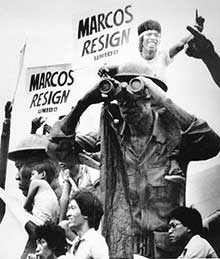 Hundreds
of thousands demonstrated against Marcos. Hundreds
of thousands demonstrated against Marcos.
|
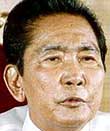
Ferdinand
Marcos
|
| The Aquino funeral drew millions and gave impetus to the broad-based People’s Power movement which eventually forced Marcos from power. |
| Read
more about Aquino |
|
|
A coup against Soviet Union President Mikhail S. Gorbachev by hard-line Communist Party members (State Emergency Committee), collapsed in the face of popular opposition. Russian Federation President Boris N. Yeltsin, having quit the Party the previous year, had called for a general strike. |
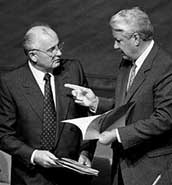
|
| Mikhail S. Gorbachev | Boris N.Yelsin |
|
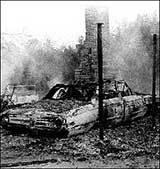
Samuel Bowers, the 73-year-old former Imperial Wizard
of the White Knights of the Ku Klux Klan, was convicted in
Hattiesburg, Mississippi, of ordering a firebombing that
killed civil rights activist Vernon Dahmer 32 years before.
Bowers had also been instrumental in the killing of three
other civil rights workers in Philadelphia, Mississippi for which
he was never charged.
On Vernon Dahmer’s tombstone are the words,
“If
you don’t vote, you don’t count.” |
|
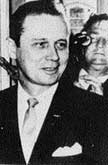
|
32
years to justice |
 |
Samuel
Bowers |
Dahmer's
home after the bombing |
|
President Dwight Eisenhower announced a voluntary moratorium on nuclear weapons testing. A report outlining a system for monitoring and verifying compliance of a complete ban on such testing had been released just the day before. The Conference of Experts, as it was known, had been meeting in Geneva, Switzerland, to work out the details on detection of violations of such a treaty. The U.S. delegation was led by Nobel physics laureate Ernest Lawrence from the University of California (the Lawrence Livermore National Laboratory is named after him).
Eisenhower predicated his moratorium on U.S.S.R. and U.K. agreement to the same limitations. All three countries agreed to the one-year halt in testing and to begin negotiations on a complete test ban at the end of October; all three performed last-minute (atmospheric) tests before the opening of talks. |
|
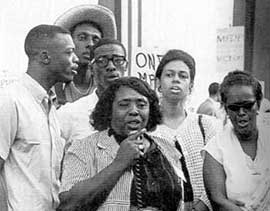 |
Fannie Lou Hamer, leader of the Mississippi Freedom Democratic Party (MFDP), testified in front of the Credentials Committee at the Democratic National Convention. She was challenging the all-white delegation that the segregated regular Mississippi Democrats had sent to the presidential nominating convention. |
< Singing
at a boardwalk demonstration: Hamer (with microphone), Stokely
Carmichael (in hat), Eleanor Holmes
Norton, Ella Baker. |
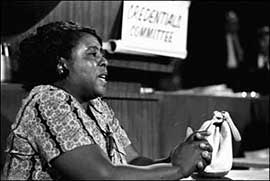 |
Mississippi’s Democratic Party excluded African Americans from participation. The MFDP, on the other hand, sought to create a racially inclusive new party, signing up 60,000 members.
The hearing was televised live and many heard Hamer’s impassioned plea for inclusion of all Democrats from her state. |
| The hearing was televised live and many heard Hamer’s impassioned plea for inclusion of all Democrats from her state. In her testimony she spoke about black Mississippians not only being denied the right to register to vote, but being harassed, beaten, shot at and arrested for trying. Concerned about the political reaction to her statement, President Lyndon Johnson suddenly called an impromptu press conference, thereby interrupting television broadcast of the hearing. |
| Hear her testimony |
|
Link
to photo gallery  |
|
|
|
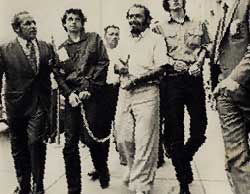
The FBI (Federal Bureau of Investigation) arrested twenty in Camden, New Jersey, and five in Buffalo, New York, for conspiracy to steal and destroy draft records. Eventually known as the Camden 28, most were Roman Catholic activists, including four priests, and a Lutheran minister.
|
“We
are not here because of a crime committed in Camden but
because of a war committed
in Indochina....” Cookie
Ridolfi |
| The Camden 28 |
|
|
Rhodesia’s team was banned from competing in the Olympic Games with just four days to go before the opening ceremony in Munich, Germany. The National Olympic Committees of Africa had threatened to pull out of the games unless Rhodesia was barred from competing. Though the Rhodesian team included both whites and blacks, the government was an illegal one, controlled by whites though they represented just 5% of the country’s population. It had broken away from the British Commonwealth over demands from Commonwealth member nations that power be yielded to the majority. |
Read
more |
|
|
|
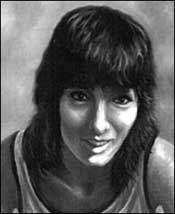
The Kerr-McGee Corporation agreed to pay the estate of the late Karen Silkwood $1.38 million ($2.68 in 2008), settling a 10-year-old nuclear contamination lawsuit. She had been active in the Oil, Chemical and Atomic Workers union, specifically looking into radiation exposure of workers, and spills and
leaks of plutonium.
|
| The
story of Karen Silkwood |
|
|
Mahatma Gandhi, weighing only 90 pounds, was released unconditionally from Sassoon Hospital in Poona because, after 5 days of his latest “fast unto death,” the doctors feared that his body could no longer stand the strain of fasting.
He had been taken to the hospital from Yeravda jail, which he had described as his “permanent address,” when he started his fast. He was protesting official refusal to allow him to continue his work with the Untouchables (he had called them harijan, or “children of God”) while in prison. |
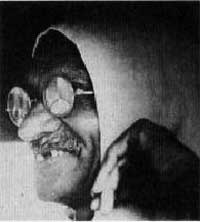
Gandhi
leaving hospital, 1933
|
| He had deliberately courted arrest, rejecting an order permitting him to reside only within the limits of Poona, and had been sentenced to a year’s imprisonment. |
| Gandhi and his fasts |
|
In
a letter to his friend Anne Marie Petersen shortly before
the end
of British colonial rule in India, Mahatma Gandhi wrote, “When
there is independence, why should you fear the majority?
If you have God with you and the majority have not, should
you still fear? And if both have God between them who should
fear whom? Is there then any question of majority and minority?
Let us pray.
Love.
Bapu” |
|
Over one million joined hands across the three Baltic republics (Lithuania, Latvia and Estonia) in a 400-mile-long chain of resistance against control by the U.S.S.R. (Union of Soviet Socialist Republics).
It was the 60th anniversary of the Soviet-German Non-Aggression Pact, also known as the Molotov-Ribbentrop Pact after the foreign ministers of the Soviet Union and Nazi Germany who had negotiated it.
Generally called the Hitler-Stalin Pact, it secretly agreed to Soviet control of Latvia and Estonia, and German influence over Poland and Lithuania. Germany, again secretly, later ceded control over Lithuania to the Soviets for 7.5 million dollars in gold ($115 in 2008 dollars). |
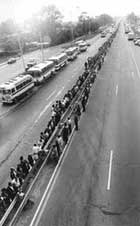 Baltic hands Baltic hands |
|
|
France became the world's fifth thermonuclear power when it exploded a hydrogen bomb at the Fangataufa Atoll in the South Pacific. It had a yield of 2.6 megatons (the equivalent of more than two-and-a-half million tons of TNT) and heavily contaminated the atoll, leaving it off-limits to humans
for six years.
|
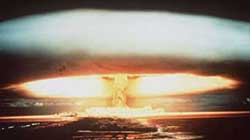 Fangataufa
test Fangataufa
test
|
| Atmospheric and underwater nuclear weapons testing continued there for nearly thirty more years. |
|
| United
Farm Workers Organizing Committee (UFWOC) leaders Cesar
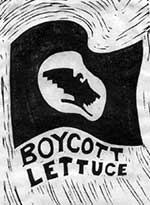
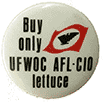
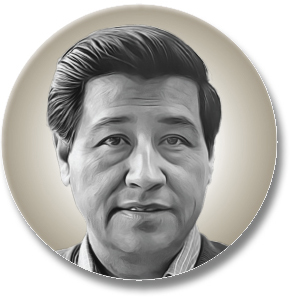
Chavez and Dolores Huerta called for a consumer boycott of lettuce to support the strike against lettuce growers who would not negotiate contracts with the farm workers for decent wages and working conditions. |
|
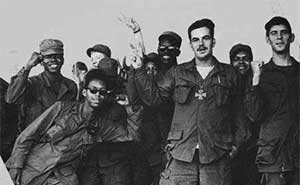
Company A of the 3rd Battalion, the 196th Light Brigade, refused to advance further into the Songchang Valley of Vietnam after five days of heavy casualties; their number had been reduced from 150 to 60.
This was one of hundreds of mutinies among troops during the war.
|
 |
|
The
French National Assembly agreed to document known as the “Declaration
of the Rights of Man.” It was a set of principles for
gauging the legitimacy of any governing system, and included
(in summary):
•
“Men are born and remain free and equal in rights”
“ Those rights are liberty, property, security, and resistance
to oppression”
“ Liberty consists in the freedom to do everything which injures
no one else”
•
“The free communication of ideas and opinions is one
of the most pre cious of the rights of man”
|
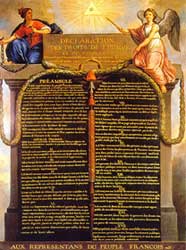 |
| Declaration des Droits de L'Homme et du Citoyen (Declaration of the Rights of Man and the Citizen) |
• Law can only prohibit such actions as are hurtful to society
and law is the expression of the general will. “ Every
citizen has a right to participate personally, or through his
representative, in its foundation.”
• No person shall be accused, arrested, or imprisoned except
when in violation of a public law, all persons are held “innocent
until they shall have been declared guilty,” and receive
punishments “only as are strictly and obviously necessary”
• The security of the rights of man and of the citizen requires
public military forces, and a “common contribution” is
essential for the maintenance of the public forces and for
the cost of administration, and that public servants are obliged
to account for use of those funds
• Property is an “inviolable and sacred right,” and
no one shall be deprived thereof |
| The complete text: |
|
The Amistad (“Friendship”), a Spanish slave ship seized by the 54 Africans who had been carried as cargo on board, landed on Long Island, New York.
The leader of the mutiny was Joseph Cinque, a Mende, from the part of Africa that is now Sierra Leone.
|
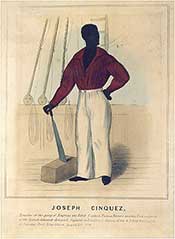
Cinque
-
one
of the revolt leaders
|
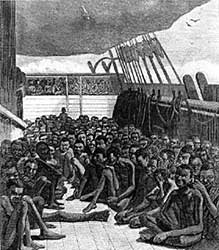 |

The
Amistad |
More on the
story of the Amistad |
|
|
The 19th Amendment, guaranteeing women the right to vote, officially became part of the U.S. Constitution: “The right of citizens of the United States to vote shall not be denied or abridged by the United States or by any State on account of sex.”
This day has been known since 1971 as
Women’s Equality Day. |
More on Women’s Equality Day
|
The
document itself, from the National Archives |
|
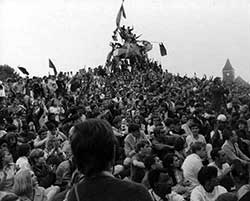
| Police and anti-war demonstrators clashed in the streets of Chicago as the Democratic National Convention nominated Vice President Hubert Humphrey for president inside the Amphitheater. |
Club-swinging Chicago police
indiscriminately tear-gassed, kicked and beat anti-war
demonstrators, delegates, reporters and innocent bystanders
outside, arresting 500. 11,900 Chicago police, 7500 Army
troops, 7500 Illinois National Guardsmen and 1000 Secret
Service agents were ultimately involved.
Protesting what was later officially designated a police
riot, members of the Democrats’ Wisconsin delegation
attempted to march to the convention hall, but police turned
them back.
When Senator Abraham Ribicoff (D-Connecticut) delivered his
nominating speech, he infuriated Mayor Richard Daley by saying, "with
George McGovern as President of the United States, we wouldn't
have Gestapo tactics in the streets of Chicago."
|

|
Julian Bond, the first black member of the previously all-white
Georgia state legislature, seconded the nomination of anti-war
presidential candidate Minnesota Senator Eugene McCarthy. Bond
added that he had seen such police behavior before, but only
in segregationist Mississippi, Alabama, and Georgia. |
a narrative
account |
Arthur Miller on the Convention |
|
| Betty Friedan leads a nationwide protest called the Women's Strike for Equality in New York City on the fiftieth anniversary of women's suffrage. |
|
Six thousand turned out for a National Organization for Women-organized Women March for Equality in New York City. They were calling for equal rights, including the demand “51 percent of everything,” reflecting women’s proportion of the U.S. population.
This first "Women's Equality Day," instituted by Bella Abzug, was established by Presidential Proclamation and reaffirmed annually. |
|
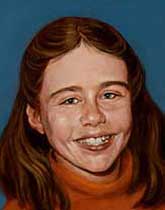
| Samantha Smith, a 10-year-old from Manchester, Maine, was invited to visit the Soviet Union by its Premier, Yuri Andropov. She had written him a letter asking if the Soviet Union intended to attack the United States. |
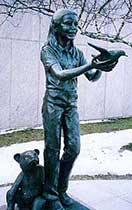 |
She had written him a letter asking if the Soviet Union intended to attack the United States. She visited him in the U.S.S.R. and became a young ambassador for peace. She died in an airplane crash at age 13 on this day returning home with her father from a peace mission. |
 |
Statue of Samantha Smith at the Maine State
Library
Augusta, Maine |
| Grade school student, peace
activist 1972-1985 |
|
 DuBois in Ghana DuBois in Ghana
|
W.E.B. DuBois, the black American sociologist, scholar, author, pan-Africanist, communist, and one of the founders of the NAACP, died in Accra, the capital of Ghana, where he had expatriated. He had been charged and tried in the U.S. for being a “foreign principal” in 1951 because he chaired the The Peace Information Center. |
The Center was dedicated to banning nuclear weapons but Secretary of State Dean Acheson designated it a Communist front group. |
W.E.B. DuBois background |
|
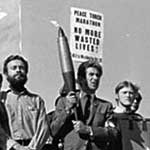 |
The
San Francisco Peace Torch began its two-month journey to
Washington, D.C. for a demonstration
against the Vietnam
War. |
| The Peace Torch Marathon arrives at the Mall. |
|
| The Abolition of Slavery Act was passed by the British Parliament. As early as 1787, members of the Society of Friends (Quakers), particularly Thomas Clarkson and Granville Sharp, organized to end the slave trade. |
| Since Quakers were barred from serving in the House of Commons, the cause was led by a member of the Evangelical Party, William Wilberforce, ending the international trade in slaves in 1807. By 1827 slaving was considered piracy and punishable by death. The complete ban on slavery itself through the British Empire didn’t happen until this day; Wilberforce was informed of the Act’s passage on his death-bed. |
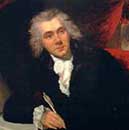
William
Wilberforce |
|
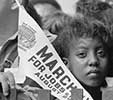
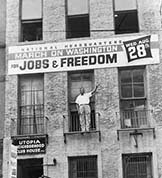
Reverend Martin Luther King, Jr. delivered his
“I Have a Dream” speech from the steps of the Lincoln Memorial to a crowd of half a million gathered on the Mall in Washington, D.C.
They gathered there for jobs and freedom. |
 |
| The speech |
1983:
Three hundred thousand marched in Washington on the 20th
anniversary of MLK's "I Have A Dream" speech for
the second
"March on Washington for Jobs, Peace and
Freedom." |
|
| 60,000 joined the Community of Peace People demonstrations in Belfast and Dublin, Ireland. Peace People was founded by two women, Betty Williams and Mairead Corrigan to decry the painful violence between Catholics and Protestants, between unionists and republicans, and to move the peace process forward in Northern Ireland. |
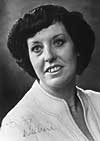 Betty Williams Betty Williams |
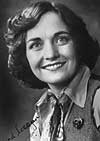 Mairead Corrigan Mairead Corrigan |
They jointly won the Nobel Peace Prize for 1976. |
| More about Betty Williams and
Mairead Corrigan |
From the Declaration of the Peace
People:
“ . . . We want to live and love and build a just
and peaceful society.
We want for our children, as we want for ourselves, our lives
at home, at work and at play, to be lives of joy and peace.
We recognize that to build such a life demands of all of us,
dedication, hard work and courage . . .
We dedicate ourselves to working with our neighbors, near and
far, day in and day out, to building that peaceful society
in which the tragedies we have known are a bad memory and a
continuing warning." |
| The Peace People’s website |
|
| The first Indian reservation, Brotherton, was established in New Jersey. A tract of three thousand acres of land was purchased at Edge Pillock, in Burlington County. The treaty of 1758 required the Delaware Tribes, in exchange for the land, to renounce all further claim to lands anywhere else in New Jersey, except for the right to fish in all the rivers and bays north of the Raritan River, and to hunt on unenclosed land. |
| History Of The Brotherton Reservation |
|
| The Soviet Union detonated its first atomic bomb in a test at Semipalatinsk in eastern Kazakhstan. It was known as Joe 1 after Josef Stalin, then General Secretary of the Communist Party. |
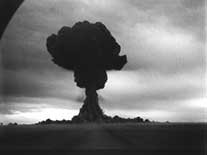
" Joe
1, the first Soviet
atomic bomb |
Andrei Dmitrievich Sakharov,
key developer of the Soviet bomb, later worked for peace
|
The Semipalatinsk
test site
|
|
| Following consultations among the NATO allies and other nations, the Western (non-Communist) countries presented to the United Nations a working paper entitled, “Proposals for Partial Measures of Disarmament,” intended as “a practical, workable plan to start on world disarmament.” The plan proposed stopping all nuclear testing, halting production of nuclear weapons materials, starting a reduction in nuclear weapons stockpiles, reducing the danger of surprise attack through warning systems, and beginning reductions in armed forces and armaments. |
|
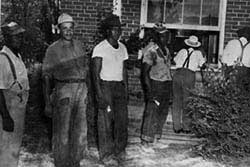 |
The U.S. Congress passed the Civil Rights Act, the first such law since reconstruction. The bill established a Civil Rights Commission which was given the authority to investigate discriminatory conditions. A Civil Rights Division was created in the Department of Justice, allowing federal prosecutors to obtain court injunctions against interference with the right to vote, among other things. |
| African
Americans in Milledgeville, Georgia, wait in line to vote
following the Civil Rights Act of 1957. |
In an ultimately futile attempt to block passage, then-Democrat, former Dixiecrat, and later Republican Senator Strom Thurmond of South Carolina set the all-time filibuster record: 24 hours, 19 minutes of non-stop speaking on the floor of the Senate.
A filibuster is the deliberate use of prolonged debate and procedural delaying tactics to block action supported by a majority of members. It can only be stopped with a 60% majority voting to end debate.
|
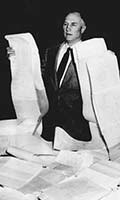 |
| Senator Strom Thurmond with
his 24-hour filibustering speech |
|
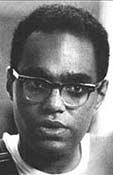
Robert Moses,
leader of SNCC |
The Student Nonviolent Coordinating Committee (SNCC) was pursuing its voter registration drive in Amite County, Mississippi. Of 5000 eligible Negro voters in the county, just one was registered to vote. SNCC leader Robert Moses was attacked and beaten this day outside the registrar’s office while trying to sign up two voters. Nine stitches were required but the three white assailants were acquitted. |
| Bob
Moses recorded the incident |
Hear
Moses recall the time |
|
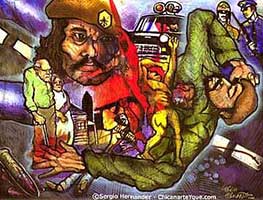
| Between 15 and 30 thousand predominantly Chicanos (Americans of Mexican descent) gathered in East LA’s Laguna Park as the culmination of the Chicano National Moratorium. It was organized by Rosalio Munoz and others to protest the disproportionate number of deaths of Chicano soldiers in Vietnam (more than double their numbers in the population). |
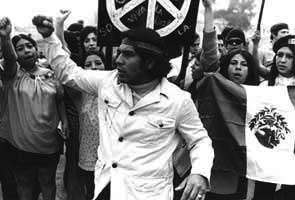 |
| There had been more than 20 other such demonstrations in Latino communities across the southwest in recent months. |
 |
Three died when the anti-war march turned violent. The Los Angeles Police Department attacked and one gunshot, fired into the Silver Dollar Bar, killed Ruben Salazar, a Los Angeles Times columnist and a commentator on KMEX-TV (he had been accused by the LAPD of inciting the Chicano community).
|
|
| A “hotline” telephone link was installed between the Kremlin in Moscow and the White House in Washington, D.C. The intention was to allow direct communication in the event of a crisis between the U.S. president and the leader of the Soviet Union (U.S.S.R.). It had been agreed to following the Cuban Missile Crisis. |
|
The Democratic Party National Convention refused to seat any delegates from the Mississippi Freedom Democratic Party (MFDP). The Credentials Committee chose to seat the all-white delegation from Mississippi’s regular Democratic Party despite overwhelming evidence of the state party’s efforts to disenfranchise Mississippi’s Negro citizens.
A proposed compromise of two non-voting guest delegates from MFDP was rejected by its leaders. |
The
dispute, the political intrigue, and the long-term effects |
|
| The Senate confirmed the appointment of Thurgood Marshall as the first Supreme Court Justice of African-American descent. Marshall had been counsel to the NAACP Legal Defense Fund, and had been the lead attorney in the Brown v. Board of Education case. He was appointed to the Court by President Lyndon Johnson after having served as Solicitor General of the U.S. for two years, and on the U.S. Court of Appeals for four. |
 |
| Thurgood
Marshall |
Who was Thurgood Marshall ?NAACP |
|
| Ten empty school busses were dynamited in Pontiac, Michigan, eight days before a school integration plan was to begin. Following Federal Judge Damon Keith’s finding that Pontiac’s school board had “intentionally” perpetuated segregation, a plan was developed by the board that included bussing of 8700 children. |
 |
| The bombers were later identified as leaders and members of the Ku Klux Klan, arrested, tried, convicted and imprisoned. |
|
| Striking
Polish workers, their numbers approaching 150,000, won a
sweeping victory in a battle with the Polish Communist government
for the right to independent trade unions and the right to
strike. Their lead negotiator was Lech Walesa, head of the
union, Solidarnos´c´ (Solidarity).
|
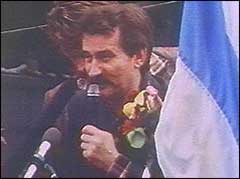 |
Lech Walesa announces the deal to cheering crowds of shipyard workers. |
|
Residents of East Timor voted for independence
from Indonesia
in a U.N.-sponsored election. |
More about the East Timor election |
|
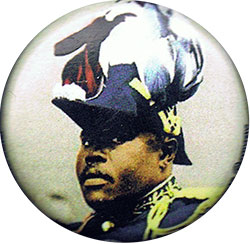
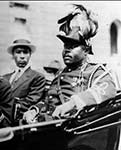
| Marcus Garvey, leader of the Universal Negro Improvement Association, often referred to as the Back-to-Africa movement in the U.S., was declared “Provisional President of Africa” in a Harlem (New York City) ceremony. |
 |
Black
nationalist Marcus Garvey is shown in a military uniform
as the 'Provisional President of Africa' during a parades
up Lenox Avenue in Harlem, New York City, in August 1922,
during the opening day exercises of the
annual Convention
of the Negro Peoples of the World. |
| Hear one of his speeches recorded that summer |
|
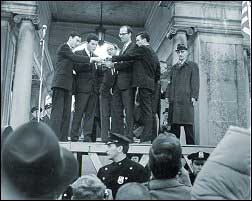 |
U.S. President Lyndon Johnson signed into law a bill criminalizing destruction of draft cards. Although it could result in a five-year prison sentence and $1000 fine, the burnings became common during anti-Vietnam War rallies and often attracted the attention of news media. |
Draft
card burning, 1967 |
|
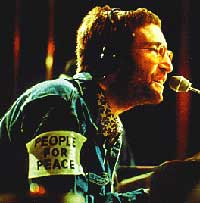 |
In federal court, John Lennon of The Beatles testified the Nixon Administration had tried to have him deported because of his involvement with anti-war demonstrations at the 1972 Republican convention in Miami. |
| The U.S. v John Lennon trailer |
|
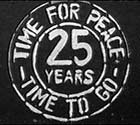
| The Irish Republican Army (IRA) declared a permanent and “complete cessation of military operations” after 25 years of bombing and 3000 deaths (both republican and unionist) intended to end British control of Northern Ireland. |
 |
|
|
August
1 2 3 4 5 6 7 8 9 10 11 12 13 14 15 16 17 18 19 20 21 22 23 24 25 26 27 28 29 30 31
visit
another month
Jan
• Feb
• March • April • May • June • July
• Aug • Sept • Oct • Nov • Dec |
If
you are not already on our email list and would like to have this
free
calendar delivered to your inbox weekly then please
Subscribe to Peace and Justice History e-newsletter
FREE!
 |
or just send me an
email
and have it sent to your friends. |
Please
support this newsletter visit
peacebuttons.info
Because of your support peacebuttons has been able to donate to
several peace and justice organizations.
see list
Thank you! |
|
|
|